Are Luxury Cars Safe for Monsoon Road Trips in India?
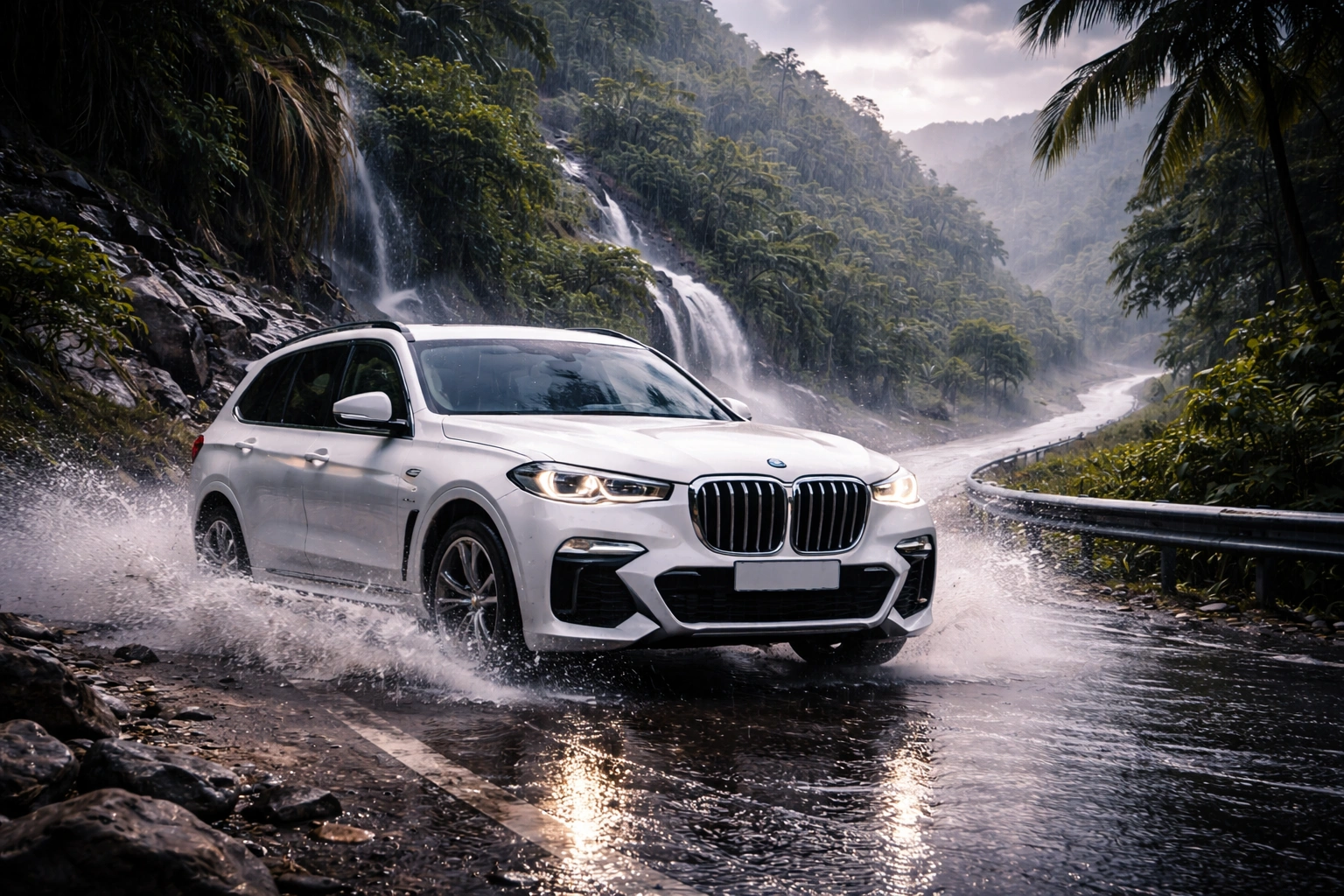
Monsoon road trips across India offer a completely different travel experience. Lush greenery, mist-covered hills, and flowing waterfalls make the landscape incredibly beautiful.
However, the rainy season also introduces a unique set of challenges. Waterlogged roads, reduced visibility, slippery surfaces, and unpredictable traffic conditions require a more cautious approach to driving.
Luxury vehicles are equipped with advanced safety features and superior comfort systems, but they are not immune to environmental risks. The key to safe monsoon travel lies in preparation and disciplined driving.
Clear Answer
Luxury cars are safe for monsoon road trips in India when driven responsibly with proper tyre condition, controlled speed, and route planning. SUVs are generally safer due to higher ground clearance and better stability on wet roads. Avoid flooded areas, sudden braking, and night driving during heavy rainfall. Chauffeur-driven travel further enhances safety and comfort.
Understanding Monsoon Road Risks
Road conditions change dramatically during monsoon months. Even well-maintained highways can develop water accumulation, making surfaces slippery.
Rural roads and hill routes are more vulnerable. Mud patches, loose gravel, and hidden potholes can create unexpected hazards.
Heavy rainfall reduces visibility and increases reaction time for drivers. Windshield glare and fogging also add to the challenge.
Luxury vehicles improve comfort but cannot eliminate these risks. Awareness and caution remain essential.
SUV vs Sedan: What Works Better?
Choosing the right vehicle is one of the most important decisions for monsoon travel.
Luxury SUVs offer higher ground clearance, which helps navigate mild flooding and uneven roads. They also provide a higher seating position, improving road visibility.
Sedans on the other hand, perform well on smooth highways but may struggle on waterlogged or damaged roads due to lower clearance.
For routes through the Western Ghats or coastal drives, SUVs are generally the safer option.
Matching the vehicle to the route improves overall safety and comfort.
The Importance of Tyre Condition
Tyres are the most critical safety component during monsoon driving.
Good tread depth allows water to be displaced efficiently, maintaining grip on wet roads. Worn tyres significantly increase the risk of skidding.
Before starting a trip, tyre pressure and alignment should be checked carefully. Incorrect pressure can reduce traction.
Even the most advanced luxury car cannot perform safely without proper tyres.
Managing Speed and Braking
Speed control is crucial during rainy conditions. Wet roads increase stopping distance, making sudden braking risky.
Smooth acceleration and gradual braking help maintain stability. Abrupt movements can cause the vehicle to lose grip.
On downhill roads, especially in hilly regions, engine braking is safer than relying entirely on brakes.
Controlled driving ensures both safety and passenger comfort.
Avoiding Waterlogged Roads
Driving through flooded roads is one of the biggest risks during monsoon travel.
Water depth is often difficult to judge, and even shallow-looking water can hide potholes or debris.
If water enters the engine, it can cause severe mechanical damage. Even SUVs have limitations when it comes to water crossings.
It is always safer to wait or find an alternate route rather than taking unnecessary risks.
Visibility Challenges in Heavy Rain
Visibility drops significantly during heavy rainfall. Windshield wipers, fogging, and glare from headlights can make driving difficult.
Maintaining safe distance from other vehicles becomes more important in such conditions.
Headlights should be used appropriately to improve visibility without causing glare for others.
Clear visibility is essential for safe decision-making on the road.
Night Driving During Monsoon
Night driving in the rain adds another layer of risk.
Poor lighting, reflections on wet roads, and reduced visibility make it harder to detect obstacles.
Potholes, debris, and sudden turns become more dangerous after dark.
Whenever possible, long-distance travel should be planned during daylight hours.
Avoiding night driving significantly improves safety.
Coastal and Hill Route Considerations
Certain regions in India receive heavier rainfall than others.
The Konkan coast and Western Ghatsexperience intense monsoon activity. Roads in these areas may face temporary blockages due to landslides or water accumulation.
Hill stations near Lonavala and Mahabaleshwar often have slippery roads and sharp curves.
Checking weather updates and road conditions before departure is essential.
Flexible travel plans help avoid unnecessary risks.
Role of Chauffeur-Driven Travel
Professional chauffeurs bring significant value during monsoon travel.
They are trained to handle wet road conditions, judge safe speeds, and navigate challenging routes.
Chauffeurs also understand how to manage braking, cornering, and overtaking safely in rain.
For passengers, this means reduced stress and a more comfortable journey.
Chauffeur-driven travel enhances both safety and convenience.
Emergency Preparedness for Monsoon Trips
Preparation is key to handling unexpected situations.
Travelers should carry fully charged mobile devices, emergency contacts, and essential supplies.
Keeping buffer time in the schedule allows flexibility in case of delays.
Avoiding tight itineraries reduces pressure to drive in unsafe conditions.
Preparedness ensures peace of mind throughout the journey.
Travel Planning Tips for Monsoon Safety
Planning ahead improves both safety and comfort.
Check weather forecasts and avoid routes prone to flooding or landslides. Ensure the vehicle is serviced and ready for long-distance travel.
Pack essentials such as rain gear, water, and basic medical supplies.
A well-planned trip reduces uncertainty and enhances the overall experience.
Frequently Asked Questions
Are luxury cars safe for monsoon road trips in India?
Ans: Yes, if the vehicle is well-maintained, tyres are in good condition, and driving is done carefully with controlled speed.
Is an SUV better than a sedan during monsoon travel?
Ans: Yes, SUVs provide better ground clearance, improved visibility, and greater stability on wet and uneven roads.
What is the biggest risk while driving during monsoon?
Ans: Waterlogging, reduced tyre grip, and hidden potholes are the most common risks.
Should night driving be avoided during heavy rain?
Ans: Yes, poor visibility and road conditions make night driving more dangerous during monsoon.
Do traction control systems prevent skidding completely?
Ans: No, they assist with stability but safe driving habits are still essential.
Conclusion
Monsoon road trips in India can be incredibly beautiful and rewarding when approached with the right mindset.
Luxury vehicles offer advanced safety features and superior comfort, but safe driving depends on preparation and discipline.
Choosing the right vehicle, maintaining tyres, controlling speed, and avoiding risky situations ensure a smooth journey.
In the monsoon season, true luxury lies in safety, patience, and thoughtful travel planning.
📞 Call us: +91 9167977799
✉️ Write to us: info@rnk.com