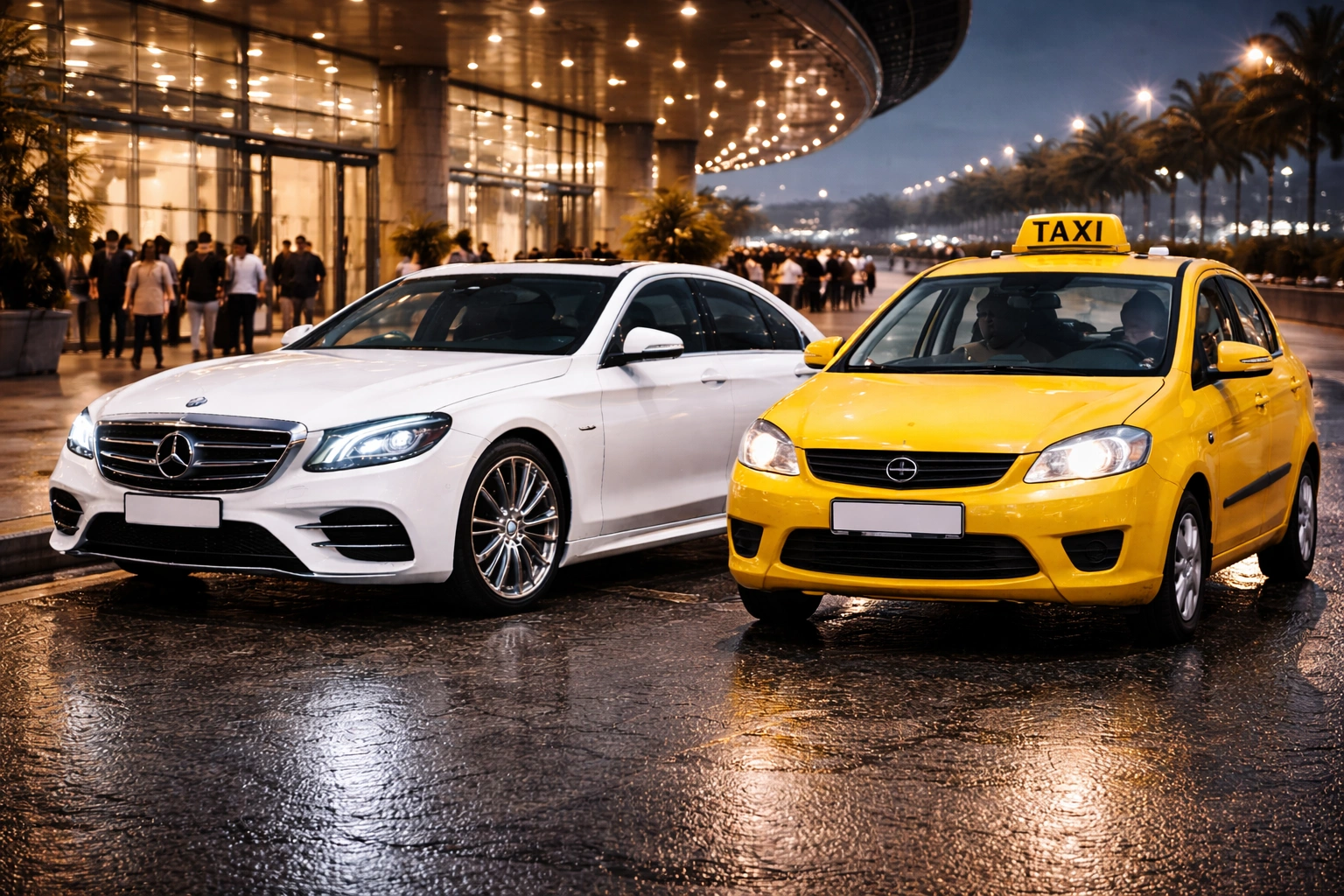
“Why should you book a luxury airport transfer instead of a regular taxi in India?”
At first glance, both taxis and airport transfers serve the same purpose. They take passengers from the airport to their destination. Because of this, many travelers assume the difference lies only in pricing. In reality, the distinction goes far beyond cost.
The real difference appears in reliability, comfort, privacy, driver professionalism, and operational coordination. A taxi is designed primarily for simple point-to-point transportation, while a luxury airport transfer is designed as a structured mobility service where timing, vehicle quality, and passenger experience are carefully managed.
For occasional travelers with flexible schedules, taxis may be sufficient. However, for executives, families with luggage, international visitors, or passengers with tight schedules, premium airport transfers operate very differently and provide greater reliability.
Clear answer upfront:
In India, taxis typically provide on-demand point-to-point transport with varying vehicle quality and availability. Premium airport transfers, on the other hand, are pre-scheduled chauffeur-driven services that include flight tracking, dedicated vehicle allocation, professional driver conduct, defined waiting policies, and transparent billing structures. Premium transfers focus on punctuality, comfort, and predictable service rather than just transportation.
Understanding these differences helps travelers choose the right option depending on the purpose of their journey.
Availability and Pre-Booking Reliability
Airport taxis generally operate either through taxi queues at the terminal or through app-based ride platforms. Availability depends on driver presence at that moment. During peak travel periods, late-night arrivals, or bad weather conditions, passengers may experience delays before finding a vehicle.
Luxury airport transfers operate differently because they are arranged in advance. The vehicle and chauffeur are assigned before the passenger arrives, ensuring guaranteed availability. Reporting time is planned based on traffic conditions and flight arrival status so the driver is present when the passenger exits the airport.
For travelers who must reach meetings, hotels, or events without delay, pre-booked transfers eliminate uncertainty.
Vehicle Condition and Comfort Standards
Taxi vehicles vary widely in condition because many are privately owned and operate under different maintenance standards. The age, cleanliness, and interior comfort of the vehicle may differ from ride to ride.
Premium airport transfers maintain vehicles under dedicated fleet management systems. Luxury sedans such as the Mercedes-Benz E-Class or Mercedes-Benz S-Class are commonly used for executive travel. These vehicles offer smoother suspension, improved cabin insulation, and comfortable rear seating designed for longer journeys.
This difference becomes particularly noticeable after long-haul international flights when passengers value quiet cabins and smooth ride stability.
Chauffeur Professionalism and Conduct
Taxi drivers typically operate independently or through ride-hailing platforms. Their driving style, familiarity with airport terminals, and customer interaction may vary significantly.
Luxury airport transfers rely on trained chauffeurs who follow defined service standards. Drivers usually wear formal attire, maintain professional etiquette, and demonstrate disciplined driving behaviour. Communication is kept minimal unless the passenger chooses to engage in conversation.
Confidentiality is also important, particularly when transporting corporate executives or VIP guests. Professional chauffeur services treat passenger privacy as a core service requirement.
Waiting Policy and Flight Tracking
Taxi services usually begin charging once the ride is accepted and the driver reaches the pickup point. If a passenger’s flight is delayed, drivers may not always adjust automatically, and coordination may require additional communication.
Premium airport transfers use real-time flight tracking systems. The service provider monitors the incoming flight and adjusts the chauffeur’s reporting time if delays occur. A defined complimentary waiting window is typically included after landing, allowing passengers time to complete immigration and baggage collection.
This structured waiting policy reduces confusion and makes the pickup process smoother.
Pricing Transparency and Billing
Taxi fares are typically meter-based or influenced by surge pricing during high demand. Traffic congestion, route changes, or peak hours can increase the final fare unexpectedly.
Luxury airport transfers operate under predefined pricing structures. Airport routes are often billed using fixed transfer slabs or time-based packages confirmed before the trip begins. Additional charges such as parking, waiting beyond limits, or tolls are usually communicated in advance.
While premium transfers may cost more than taxis, the pricing structure offers greater predictability.
Safety and Driving Discipline
Driving style can vary widely among taxi drivers depending on individual experience and road behaviour.
Professional chauffeur services emphasise defensive driving techniques and passenger comfort. Smooth acceleration, careful braking, and controlled speed management are standard practices. These habits reduce travel fatigue and increase safety, particularly during late-night journeys or difficult weather conditions.
In airport mobility, disciplined driving contributes directly to passenger comfort and safety.
When Taxi May Be Suitable
There are situations where taxis remain a practical option. Short city trips, domestic travel with light luggage, or journeys without strict time constraints may not require a premium transfer service.
However, luxury airport transfers are more suitable when reliability, professional presentation, and punctuality are important. Executive arrivals, international guests, wedding pickups, and corporate travel itineraries often benefit from the structured planning that premium transfers provide.
Ultimately, the choice depends on the context of the journey and the level of coordination required.
Frequently Asked Questions
Q1. Is a luxury airport transfer more expensive than a taxi?
Ans: Yes, premium transfers usually cost more, but the pricing is fixed and predictable.
Q2. Do taxi services track flight delays?
Ans: Not always. Many taxi services rely on manual coordination rather than automatic flight tracking.
Q3. Are luxury airport transfers always chauffeur-driven?
Ans: Yes, premium airport transfers are typically operated by professional chauffeurs.
Q4. Is waiting time included in premium transfers?
Ans: Most services include a complimentary waiting window after flight arrival.
Q5. Which option is safer for late-night travel?
Ans: Chauffeur-driven premium transfers generally offer more consistent service reliability.
Conclusion
The difference between airport transfers and taxis in India is not limited to vehicle type. The real distinction lies in reliability, coordination, comfort standards, and service discipline.
Taxis provide simple transportation from one point to another. Premium airport transfers, however, offer structured mobility with professional chauffeurs, flight tracking, and predictable scheduling. For executives, families, VIP guests, and travelers with tight schedules, the additional reliability and comfort often justify the higher cost.
Premium airport transfers are widely used across major cities such as Mumbai, Delhi, and Bangalore where business travel demand is high.
In airport travel, predictability and smooth execution often matter more than the price of the ride.
📞 Call us: +91 9167977799 ✉️ Write to us: info@rnk.com