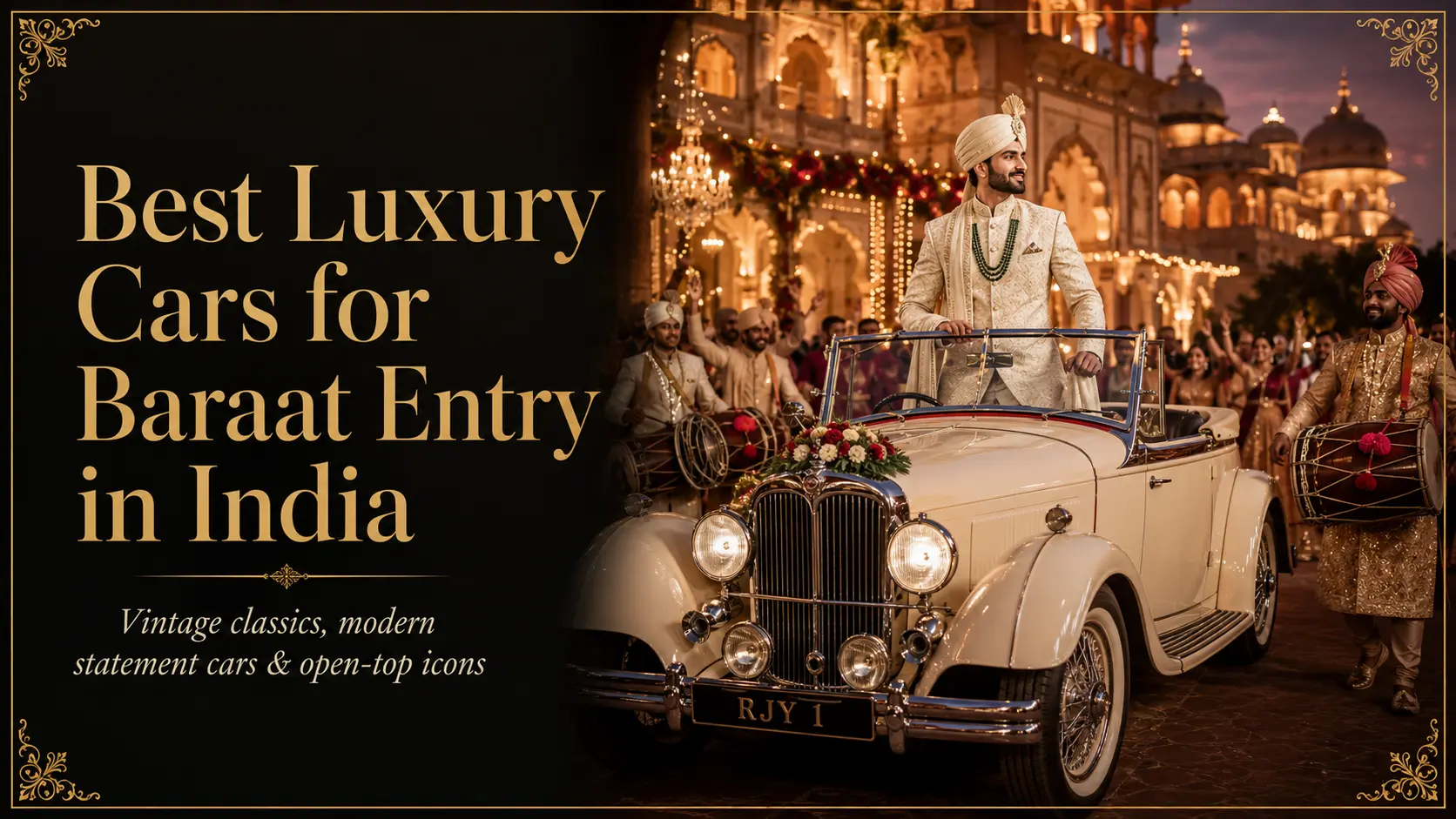
The baraat entry gets more planning attention than almost any other single moment in an Indian wedding, and the car at the center of it carries a lot of weight — literally the vehicle guests remember, photograph, and talk about long after the dhol has stopped. But "best car for baraat entry" doesn't have one universal answer. The right choice depends on whether the groom wants a classic procession car built for a slow, dancing crowd, or a modern statement vehicle meant for one striking final arrival.
This guide walks through the strongest options across both categories, what makes each one work for a baraat specifically, and how to think through which style actually fits your entry. For the broader picture of wedding vehicle choices beyond just the baraat, our guide to the best wedding cars for bride and groom entry is a useful companion read.
What Actually Makes a Car "Good" for a Baraat
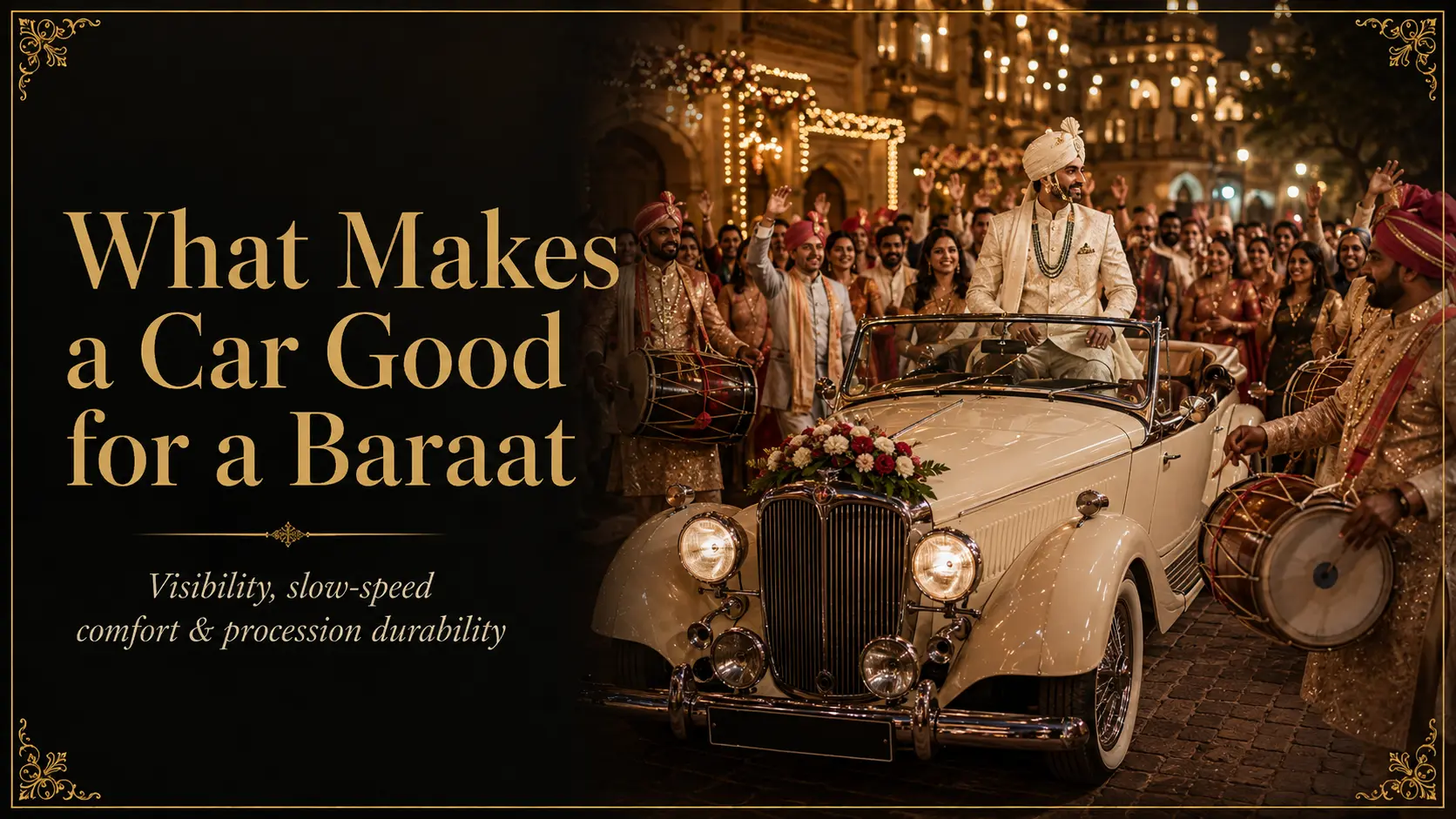
Before getting into specific models, it's worth being clear about what a baraat entry actually demands from a vehicle, because it's genuinely different from what makes a good ceremony or getaway car.
A baraat car often needs to move at very low speeds for an extended period, sometimes with the groom standing or seated in an open-top configuration, surrounded by a dancing, moving crowd. It needs to handle stop-start movement through a crowd without overheating or requiring delicate handling. And unlike the ceremony entry or getaway car, it's frequently as much about the procession itself as it is about a single arrival moment — meaning durability and crowd-suitability often matter as much as sheer visual impact.
This is exactly why the best baraat cars fall into two genuinely different categories: vehicles built for the procession itself, and modern statement cars reserved for a single final-approach moment rather than the whole route. Our detailed comparison of Rolls-Royce versus vintage cars for weddings breaks down exactly this trade-off.
Vintage and Open-Top Cars: Built for the Procession
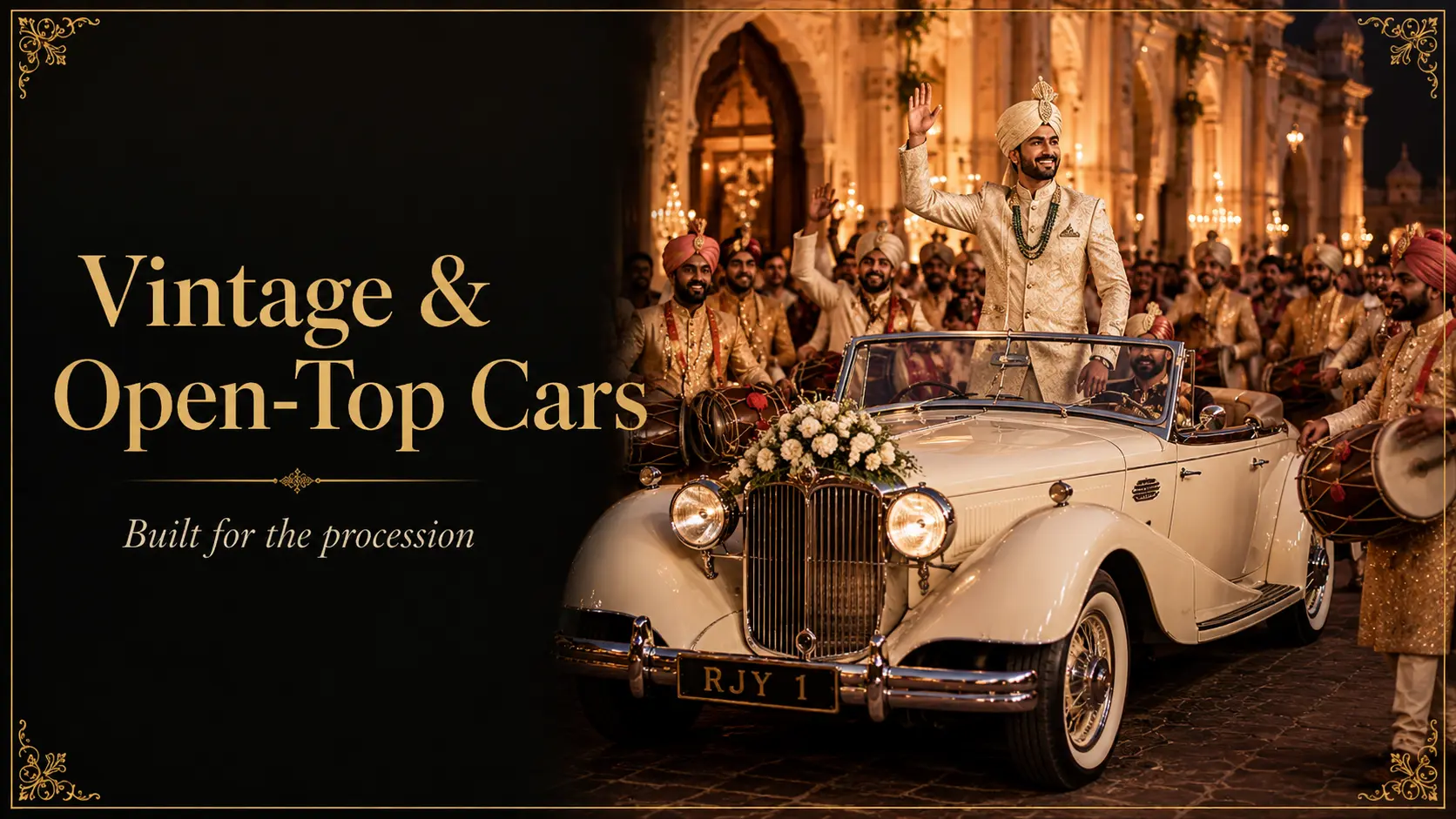
For grooms wanting a baraat that feels rooted in tradition, vintage and open-top cars remain the strongest choice — and for good reason, since they're specifically suited to the slow, crowd-surrounded nature of a real procession.
Classic convertibles and vintage sedans from the 1950s-70s era have become a signature choice for exactly this reason — their open-top or convertible configuration lets the groom be visible to the entire crowd throughout the procession, not just at the final arrival. These cars are also generally easier to move at very low speeds for extended periods without the mechanical strain that a modern performance vehicle might experience under the same conditions.
Beyond the classic convertible, decorated vintage sedans — often styled with floral arrangements across the hood and along the sides — offer a similar procession-friendly experience with a slightly more formal, less flamboyant presence, which some grooms prefer for a more traditional aesthetic. Our wedding car decoration rules and ideas guide covers exactly what styling works well on a vintage car without looking cluttered in photos.
Modern Statement Cars: Built for the Final Arrival
For grooms wanting their baraat to culminate in a genuinely striking arrival moment, a modern luxury statement car — reserved specifically for the final approach to the venue rather than the full procession — has become an increasingly popular choice.
The Rolls-Royce Phantom remains the most iconic pick in this category, its scale and presence making it the natural choice for a grand, ceremonial final arrival, particularly at larger venues where the car needs to command attention from a distance. You can browse the full Rolls-Royce collection in our fleet directly, including Phantom and Cullinan availability.
Bentley-tier models offer a similar level of presence with a slightly sportier character — a strong option for grooms wanting something that reads as unmistakably luxurious without the more formal, ceremonial weight of a Rolls-Royce. And for grooms specifically drawn to the shift toward sustainable luxury, our piece on sustainable luxury mobility trends in India covers how fully electric flagship models now deliver the same commanding presence with zero emissions — a detail increasingly meaningful for eco-conscious couples.
A practical note on pacing: these vehicles aren't built for extended slow-speed crowd driving the way a vintage open-top car is. Most providers recommend reserving them specifically for the final stretch of the entry rather than the entire baraat route — worth discussing directly with your rental provider when booking.
Styling Details That Elevate Any Baraat Car
Regardless of which category of car you choose, a handful of styling details consistently make the difference between a good baraat entry and a genuinely memorable one.
Floral detailing kept minimal and tasteful — along the hood or door frame rather than covering the entire vehicle — tends to photograph better than heavy, elaborate decoration, especially on vintage cars where the vehicle's own design is already the visual draw. For modern statement cars, less is generally more; a flagship luxury car's presence rarely needs extensive decoration to make an impact. Our wedding car decoration rules and ideas guide has a full breakdown of what tends to work well versus what looks overdone in photos and video.
Timing matters just as much as styling. A baraat car arriving during golden hour or a well-lit evening slot will consistently photograph better than the same entry at midday — worth factoring into how the overall wedding day timeline gets built, rather than treating the baraat time as fixed and unchangeable.
Matching the Car to Your Baraat Style
Rather than choosing a car in isolation, it's worth matching the vehicle to the overall style and energy of your specific baraat.
For a high-energy, traditional procession with dhol, dancing, and an extended route, a vintage convertible or open-top classic car remains the strongest fit — built specifically for visibility and durability throughout a longer, slower journey. For a more contemporary baraat that prioritizes one striking final moment over an extended procession, a modern statement car used for the final approach creates maximum visual impact exactly when it matters most.
For grooms wanting the best of both, the increasingly popular hybrid approach — procession on foot or with a decorated vintage car, transferring into a modern statement car for the final stretch — gives you genuine tradition alongside a modern statement moment, without asking either vehicle to do a job it isn't built for. This same thinking extends naturally into the reception; our luxury cars for sangeet and reception events guide covers vehicle choices for the rest of the wedding beyond the baraat itself.
Booking Timelines and Availability
Baraat vehicles, particularly the most in-demand vintage models and specific luxury statement cars, face genuine scarcity during peak Indian wedding season, and availability tightens fast.
As a general guideline, both premium vintage cars and specific luxury statement vehicles are worth locking in six to eight months ahead of a peak season date — these are consistently among the most requested vehicles across every wedding happening in the same window. For couples planning the full multi-day fleet around the baraat car, our wedding car rental checklist walks through everything to confirm before signing anything, and our guide on how many cars are actually needed for Indian weddings helps you size the rest of the fleet around this one key booking. If your wedding is in a destination city, our wedding and event cars in Jaipur, Rajasthan guide is also worth reading.
Questions to Ask When Booking Your Baraat Car
A short list of specific questions will tell you quickly whether a provider can deliver the exact baraat experience you're picturing, rather than just confirming a car is available.
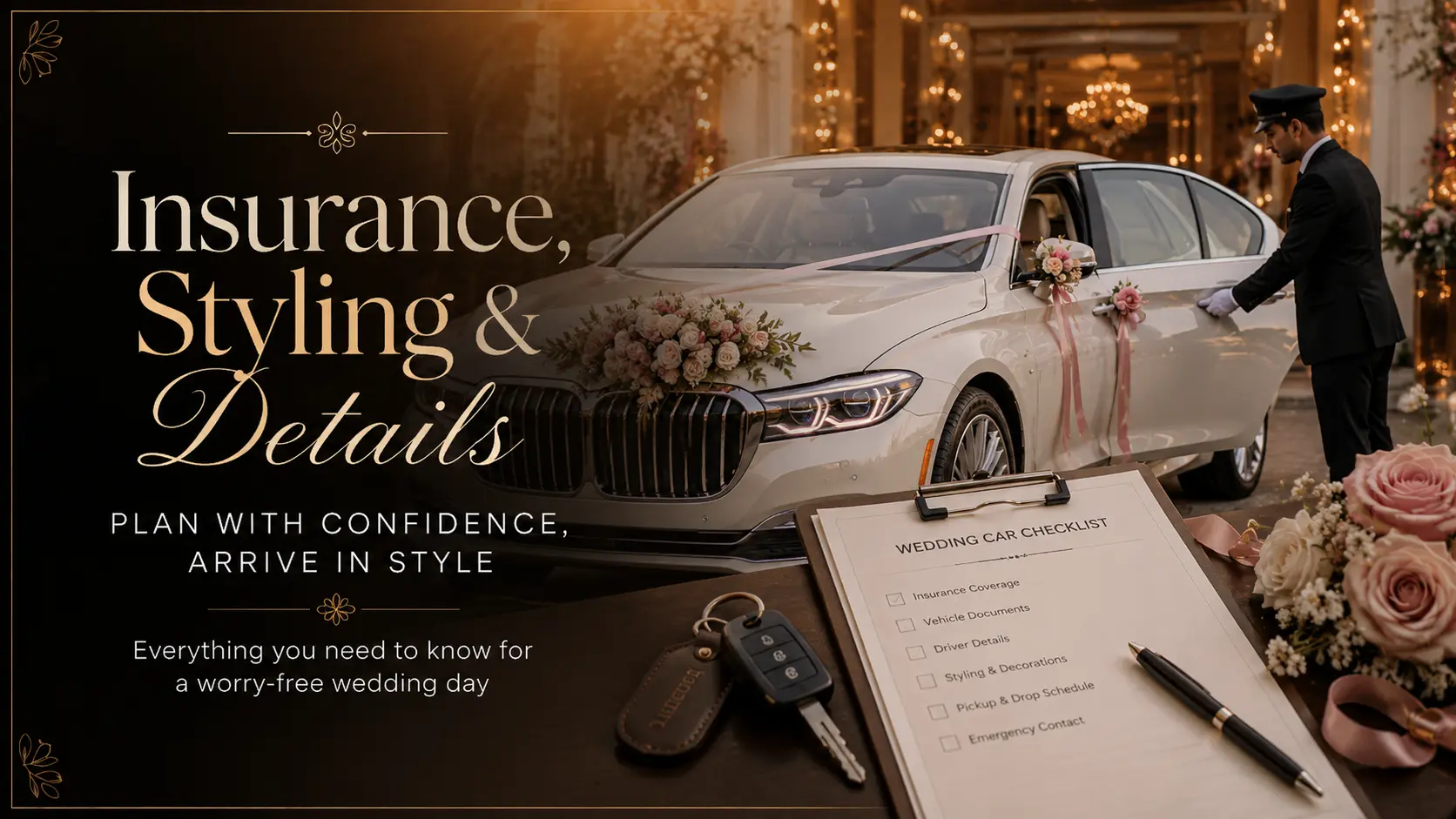
Ask whether the specific vintage model or luxury statement car is available in the color and configuration you want for your date. Ask how the provider handles pacing for an extended procession versus a single final-approach arrival, and whether they'd recommend one over the other for your specific plan. Ask what styling additions, like tasteful floral detailing, they can arrange directly. And ask about insurance and damage terms specific to that vehicle — our guide on common mistakes to avoid while renting luxury cars and our wedding-specific piece on mistakes to avoid while booking wedding cars cover exactly what to check here, since high-value baraat vehicles often carry different terms than standard rentals.
Frequently Asked Questions
What's the best type of car for a traditional baraat procession? Vintage convertibles and open-top classic cars are generally the best fit for an extended, crowd-surrounded procession, since they're built for visibility and low-speed durability over a longer route.
Can a Rolls-Royce or similar flagship be used for the entire baraat route? It can, but these vehicles aren't designed for extended slow-speed procession driving — most providers recommend reserving them for the final approach to the venue rather than the full route.
How far in advance should we book a baraat car? Popular vintage models and specific luxury statement cars should be booked six to eight months ahead for peak wedding season dates, given how in-demand they are.
Is it common to use two different cars for one baraat? Yes — many grooms now combine a traditional procession vehicle with a modern statement car reserved specifically for the final arrival, getting both tradition and a striking entry moment.
Does the baraat car need special insurance? High-value vintage and luxury statement vehicles often carry different insurance terms than standard rentals, so it's worth specifically confirming coverage and exclusions before booking.
The Bottom Line
There's no single "best" baraat car — the right choice depends on whether your priority is an extended, traditional procession or a striking final arrival moment, and increasingly, couples are finding ways to plan for both. Whichever direction fits your vision, booking early and confirming the details that matter — pacing, styling, insurance — is what turns the baraat from just another wedding moment into the one everyone remembers.
Planning your baraat entry and want help choosing the right car for your style? Get in touch with our team to talk through options for your date, or explore the full RNK fleet to see current vintage and luxury statement vehicles available.