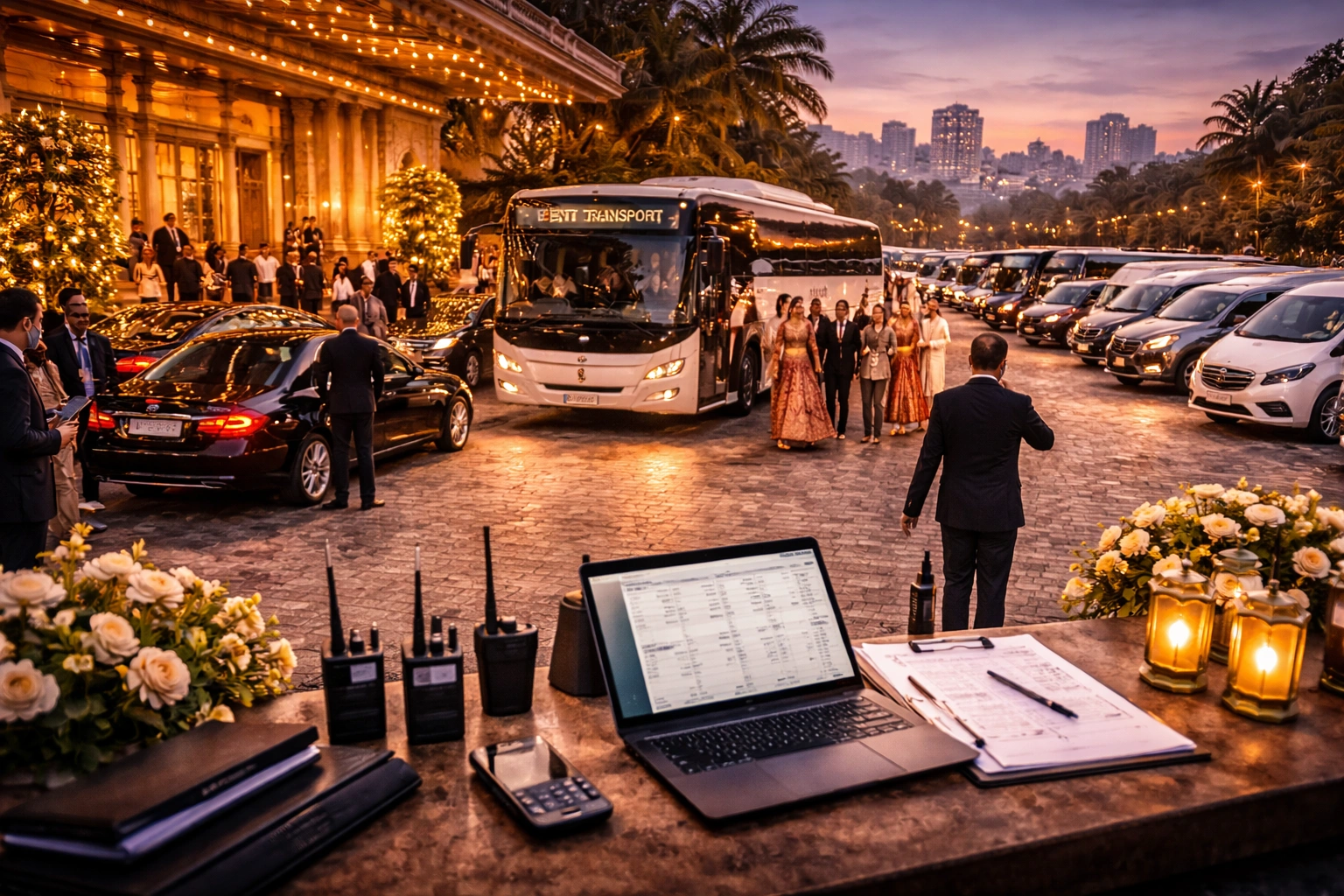
“We Are Organising a Large Event with 300–1,000 Attendees. How Do We Manage Transportation Without Confusion?”
Managing transportation for a large gathering can quickly become complicated if not planned properly. When hundreds of guests arrive within a limited time window, even small coordination gaps can lead to delays and congestion.
In India, where traffic conditions and venue access can be unpredictable, transportation becomes a critical part of event planning. It is no longer just about arranging vehicles but about managing the overall flow of guests.
Whether it is a corporate event, wedding function, exhibition, or private gathering, event transportation services in India must ensure smooth arrivals, minimal waiting time, and a well-organised experience for all attendees.
Clear Answer:
Event transportation for large gatherings requires proper guest segmentation, a balanced fleet strategy, staggered arrival planning, route management, parking coordination, and a central control system. The focus should be on managing guest flow efficiently rather than simply increasing the number of vehicles. Professional support from luxury transport providers helps streamline this process.
Why Large Event Transportation Is Challenging
Large-scale events in India come with multiple logistical challenges. Traffic congestion, security checks, and limited parking space can disrupt even well-planned schedules.
When many vehicles arrive at the same time, entry points can become crowded. This creates delays and confusion for both guests and organisers.
Without structured planning, VIP guests may face inconvenience, and general attendees may experience long waiting times.
The goal of professional transport planning is to create a smooth and controlled movement of guests, often supported by experienced event mobility teams.
Segment Guests Before Planning Transport
The first step in managing transportation is dividing guests into categories. Not all attendees require the same level of service or arrival timing.
VIP guests, speakers, sponsors, media, and general attendees should be handled separately. Each group has different expectations and requirements.
By segmenting guests, organisers can assign the right vehicles and schedules. This improves efficiency and avoids unnecessary delays.
Proper segmentation ensures that important guests receive priority without affecting overall flow. Many organisers align this with VIP movement services.
Use a Mixed Fleet for Better Efficiency
A successful event transportation plan uses a combination of different vehicle types. This helps balance comfort and efficiency.
Luxury cars and SUVs are best suited for VIP guests and executives. They provide comfort and a premium experience.
Vans and minibuses are useful for small groups such as media teams or sponsors. They help reduce the number of vehicles on the road.
For large groups, shuttle buses are the most efficient option. They move more people with fewer trips.
A mixed fleet strategy ensures smooth and organised transportation. You can explore vehicle options in the full fleet collection.
Plan Staggered Arrival Timings
One of the biggest mistakes in large events is allowing all guests to arrive at the same time. This leads to congestion and delays.
Staggered scheduling helps manage this issue. Guests are assigned different arrival time slots based on their category.
Hotel pickups and airport transfers can also be scheduled in phases. This reduces pressure on entry points. Proper airport transfer planning is essential here.
Staggered arrivals create a smooth flow and improve the overall guest experience.
Route Planning and Traffic Management
Traffic conditions in Indian cities can change quickly. Roadblocks, diversions, and peak-hour congestion can affect travel time.
Event planners should always prepare multiple route options. Having backup routes ensures flexibility during unexpected situations.
Time buffers should be included in all schedules. This helps absorb delays without affecting the event timeline.
Proper route planning ensures that guests reach the venue on time. Insights from luxury travel planning guides can also help.
Central Coordination Is Essential
A central coordination team is necessary to manage transportation for large gatherings. Without it, communication gaps can occur.
A dedicated transport coordinator monitors all vehicle movement. They stay in contact with drivers and manage real-time updates.
This system helps handle delays, adjust schedules, and maintain overall control. Many companies use structured corporate transport systems for this.
Central coordination ensures that everything runs smoothly throughout the event.
Parking and Holding Area Management
Most venues do not have enough parking space for large numbers of vehicles. Without planning, this can lead to chaos at entry points.
Off-site holding areas are used to manage this issue. Vehicles wait in designated zones until they are needed.
Cars are called to the venue only when required. This prevents overcrowding and keeps the entrance clear.
Proper parking management creates a more organised and professional setup.
Departure Planning Is Equally Important
Many organisers focus only on arrivals and forget about departure planning. However, departures can be even more challenging.
If not managed properly, vehicles can crowd exit points and create confusion.
A structured departure plan includes designated pickup zones and scheduled exit timings.
VIP guests should be prioritised, while shuttle services can handle larger groups. This approach is similar to VIP chauffeur coordination.
Proper planning ensures a smooth and comfortable exit for all attendees.
Common Mistakes to Avoid
One common mistake is underestimating the importance of transport planning. This can lead to last-minute issues.
Relying only on cars instead of using buses can increase congestion.
Lack of coordination between drivers and organisers can create confusion.
Ignoring traffic conditions can result in delays.
Avoiding these mistakes helps ensure a successful event.
Tips for Smooth Event Transportation
Start planning transportation at least a few weeks in advance. Early planning allows better coordination.
Work with experienced transport providers who understand large event logistics.
Use technology for tracking and communication when possible.
Keep clear communication with guests regarding pickup timings and locations.
These steps help create a smooth and stress-free experience. You can also refer to event transport best practices for planning insights.
Why Professional Transport Services Matter
Professional transport services bring experience and structure to large events. They understand how to manage complex logistics.
They provide trained drivers, well-maintained vehicles, and proper coordination systems.
Their expertise helps avoid common issues and ensures smooth execution.
This makes a significant difference in the overall success of the event.
Frequently Asked Questions
How early should transport planning begin?
Ans: Ideally three to six weeks before the event.
Is a transport coordinator necessary?
Ans: Yes, especially for events with large guest numbers.
Are buses better than multiple cars?
Ans: Yes, buses are more efficient for large groups.
Should VIP transport be separate?
Ans: Yes, VIP guests should have dedicated vehicles.
Is full-day booking better?
Ans: Yes, it provides flexibility and better coordination.
Conclusion
Event transportation for large gatherings in India requires detailed planning and coordination. It is not just about arranging vehicles but managing guest movement efficiently.
From segmentation and fleet selection to route planning and coordination, every step plays an important role.
When done correctly, transportation becomes seamless and enhances the overall event experience.
A well-managed transport system ensures that guests arrive comfortably, the event runs on time, and the entire experience feels organised and professional.
📞 Call us: +91 9167977799
✉️ Write to us: info@rnk.com