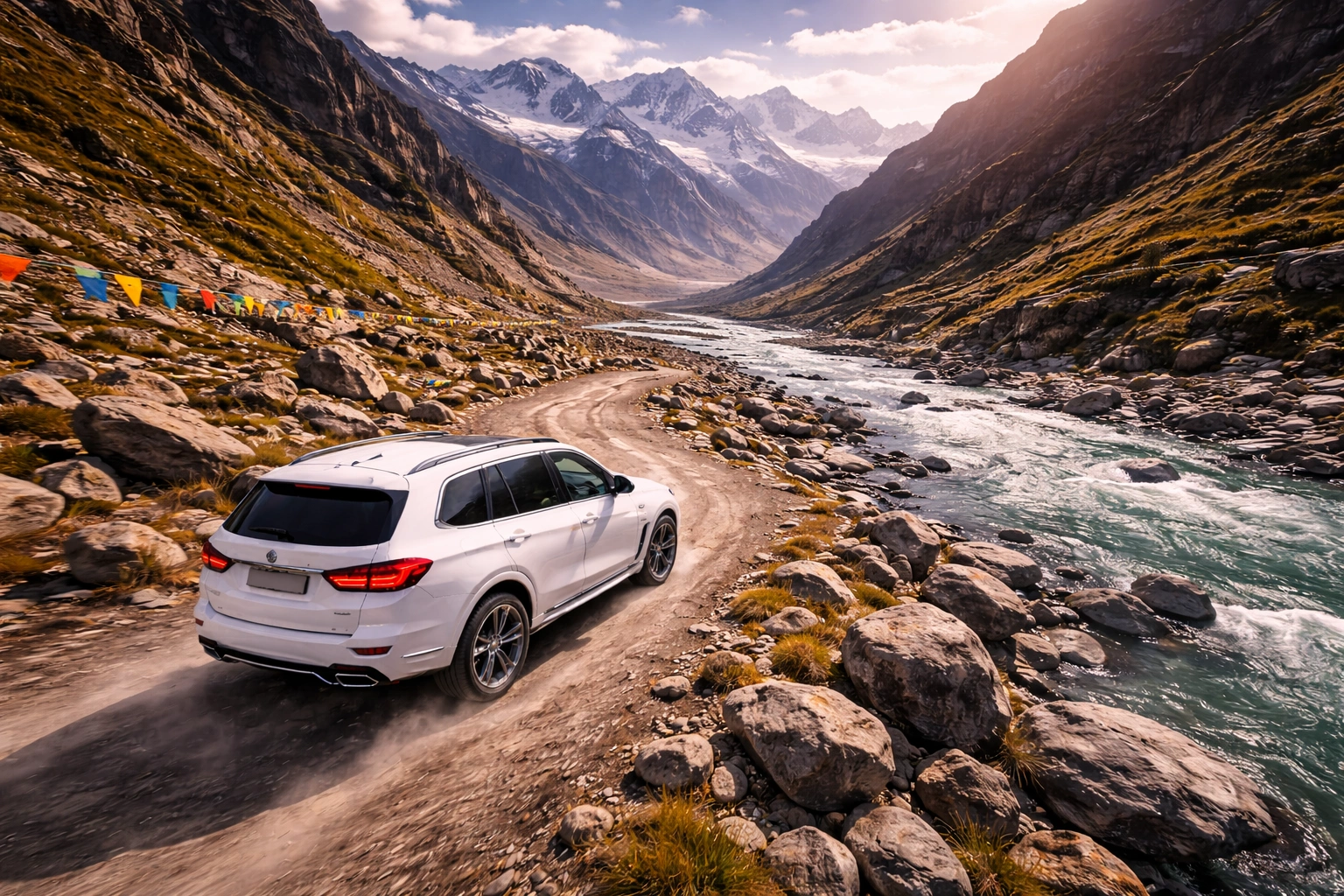
Can We Do a Manali to Spiti Valley Road Trip in a Luxury Car, and Is It Practical?
A road trip from Manali to Spiti Valley is one of the most dramatic and visually striking journeys in India. Snow-capped peaks, barren landscapes, and deep valleys create an experience that feels almost otherworldly.
Unlike traditional highway drives, this route is defined by raw terrain. It is a mix of paved roads, gravel sections, water crossings, and narrow mountain tracks carved into cliffs.
Luxury travel on this route is absolutely possible—but it is not about smooth highways or speed. It is about controlled comfort, capability, and expert handling of extreme terrain.
Clear Answer
A Manali to Spiti Valley luxury road trip is practical when undertaken in a high ground-clearance chauffeur-driven luxury SUV with strong suspension and mountain-driving expertise. Sedans are not suitable for this route due to rough terrain and water crossings. Proper acclimatisation, fuel planning, and seasonal timing are essential for a safe and comfortable journey.
Understanding the Manali–Spiti Route Reality
The journey from Manali to Spiti follows one of the most challenging yet scenic routes in India. It typically passes through the Atal Tunnel or Rohtang Pass and continues toward Gramphu, Batal, and Kunzum Pass before reaching Kaza.
The terrain changes constantly. Smooth tarmac roads can suddenly turn into rocky trails or shallow river crossings formed by melting glaciers.
Weather conditions also play a major role. Clear mornings often give way to flowing water streams and reduced visibility by afternoon.
Because of these factors, this route demands both vehicle strength and careful driving.
Why a Luxury SUV Is Essential
A luxury SUV is the most suitable vehicle for the Manali to Spiti Valley road trip.
High ground clearance allows the vehicle to pass over rocks, uneven roads, and water crossings without damage. Strong suspension systems absorb shocks and improve passenger comfort.
SUVs also provide better traction on loose gravel and steep inclines. This becomes critical in high-altitude mountain conditions.
Equally important is the chauffeur. A trained mountain driver understands how to navigate narrow cliff roads, assess water crossings, and use engine braking effectively.
For a safe and stress-free experience, a chauffeur-driven SUV is highly recommended.
The Role of Mountain Driving Expertise
Driving in the Himalayas is very different from driving in cities or highways. Roads are narrow, unpredictable, and often lack barriers.
Professional chauffeurs are trained to maintain control in such environments. They manage speed carefully, avoid unnecessary risks, and adapt to changing road conditions.
They also understand how to handle steep descents without overheating brakes, which is a critical safety factor.
Their experience ensures that passengers can enjoy the journey without worrying about the technical challenges of driving.
Altitude and Acclimatisation Planning
Spiti Valley is located at a very high altitude, with Kaza situated above 12,000 feet.
Rapid altitude gain can lead to discomfort if the body does not get time to adjust. Spending a night in Manali before starting the journey helps begin acclimatisation.
Travelers are advised to stay hydrated, avoid overexertion, and take regular breaks.
Luxury travel in high-altitude regions focuses on pacing and comfort rather than rushing between destinations.
Route Timing and Best Season
The Manali–Spiti route is typically open from late May or early June until late September.
During this period, snow has been cleared, and road accessibility improves significantly.
Early mornings are the best time to start the journey. Water crossings are calmer, and visibility is better compared to afternoon conditions.
Traveling outside this window can be risky due to snowfall and road closures.
Choosing the right season is essential for a safe journey.
Fuel Planning and Remote Logistics
Fuel planning is a critical aspect of this trip. After leaving Manali, fuel stations are extremely limited.
Travelers must ensure their vehicle is fully refueled before entering the Spiti route.
For extended travel within Spiti Valley, carrying extra fuel may be necessary.
Mobile networks are also unreliable in many areas. It is important to complete bookings and route planning in advance.
A structured plan ensures that the journey remains smooth and uninterrupted.
Comfort Expectations on the Spiti Route
Even in a luxury SUV, travelers should expect some level of physical movement due to rough terrain.
Road vibrations, slow driving speeds, and uneven surfaces are part of the experience.
However, premium SUVs provide significantly better comfort through superior seating, suspension, and climate control.
Maintaining a steady pace improves both passenger comfort and vehicle performance.
Luxury in Spiti is about controlled comfort rather than perfect road conditions.
Alternative Route via Shimla
Some travelers prefer an alternative route via Shimla and Kinnaur.
This route offers a gradual increase in altitude, making it easier for the body to adapt.
Road conditions are generally better in the initial stages compared to the Manali route.
Although it takes longer, it provides a more relaxed and less physically demanding journey.
Choosing between routes depends on travel time and personal comfort preferences.
Who Should Choose Luxury SUV Travel for Spiti
A luxury SUV road trip to Spiti Valley is ideal for travelers who want to combine adventure with comfort.
It is suitable for photographers, premium travelers, corporate groups, and international visitors.
However, it is important to understand that this is still a rugged journey. Expectations should align with the terrain.
Those who appreciate raw landscapes and remote travel will find this experience highly rewarding.
Travel Planning Tips for a Seamless Experience
Advance planning plays a major role in the success of this journey.
Booking accommodations early ensures availability in remote locations. Packing warm clothing is essential due to temperature variations.
Carrying basic medical supplies helps manage altitude-related discomfort.
Staying informed about weather and road conditions allows better decision-making during travel.
Preparation transforms a challenging journey into a comfortable experience.
Frequently Asked Questions
Can a luxury sedan complete the Manali to Spiti road trip?
Ans: No, most luxury sedans do not have the ground clearance required for this terrain.
Is the Manali–Spiti road safe for chauffeur-driven travel?
Ans: Yes, when managed by experienced mountain chauffeurs with proper planning.
What is the best season for the Spiti road trip?
Ans: Late May to September offers the safest and most stable conditions.
Are fuel stations available throughout the route?
Ans: No, fuel stations are limited, so advance planning is essential.
Is altitude sickness common in Spiti?
Ans: It can occur, but proper acclimatisation and pacing reduce the risk.
Conclusion
A Manali to Spiti Valley road trip is one of the most extraordinary journeys in India when approached with the right planning.
Luxury travel on this route is not about speed or smooth highways. It is about capability, preparation, and safe exploration of extreme landscapes.
Choosing a high-performance SUV, relying on experienced chauffeurs, and planning logistics carefully ensures a seamless experience.
When executed properly, this journey becomes a perfect blend of adventure and controlled luxury in the heart of the Himalayas.
📞 Call us: +91 9167977799
✉️ Write to us: info@rnk.com