What Actually Makes Modern Luxury Cars Feel Premium in India Today?
Luxury cars today are defined by far more than elegant interiors or powerful engines. Modern premium vehicles combine intelligent technology, advanced comfort engineering, digital connectivity, and enhanced safety systems to create a refined travel environment.
In India, road conditions, traffic density, and climate vary dramatically across cities and highways. Because of this, the technologies that truly matter are those that improve passenger comfort, reduce travel fatigue, and ensure safety in unpredictable driving environments.
For travelers who regularly use luxury car rental services in India, the experience inside the vehicle plays a major role in defining the journey.
A well-designed luxury vehicle offers more than transportation. It creates a calm, quiet, and comfortable space that allows passengers to relax, work, or enjoy the ride.
Clear Answer
Modern luxury car technology in India focuses on rear-seat comfort systems, adaptive suspension for uneven roads, cabin noise insulation, advanced climate control, digital connectivity, and driver-assistance safety systems such as ADAS. Together, these features create a refined travel experience for both city commuting and long-distance journeys.
Understanding these technologies helps travelers choose vehicles that deliver real comfort on Indian roads.
Rear-Seat Technology for Chauffeur-Driven Comfort
In many countries, luxury vehicles are primarily driven by their owners. In India, however, premium vehicles are often chauffeur-driven, which makes rear-seat comfort one of the most important aspects of luxury car design.
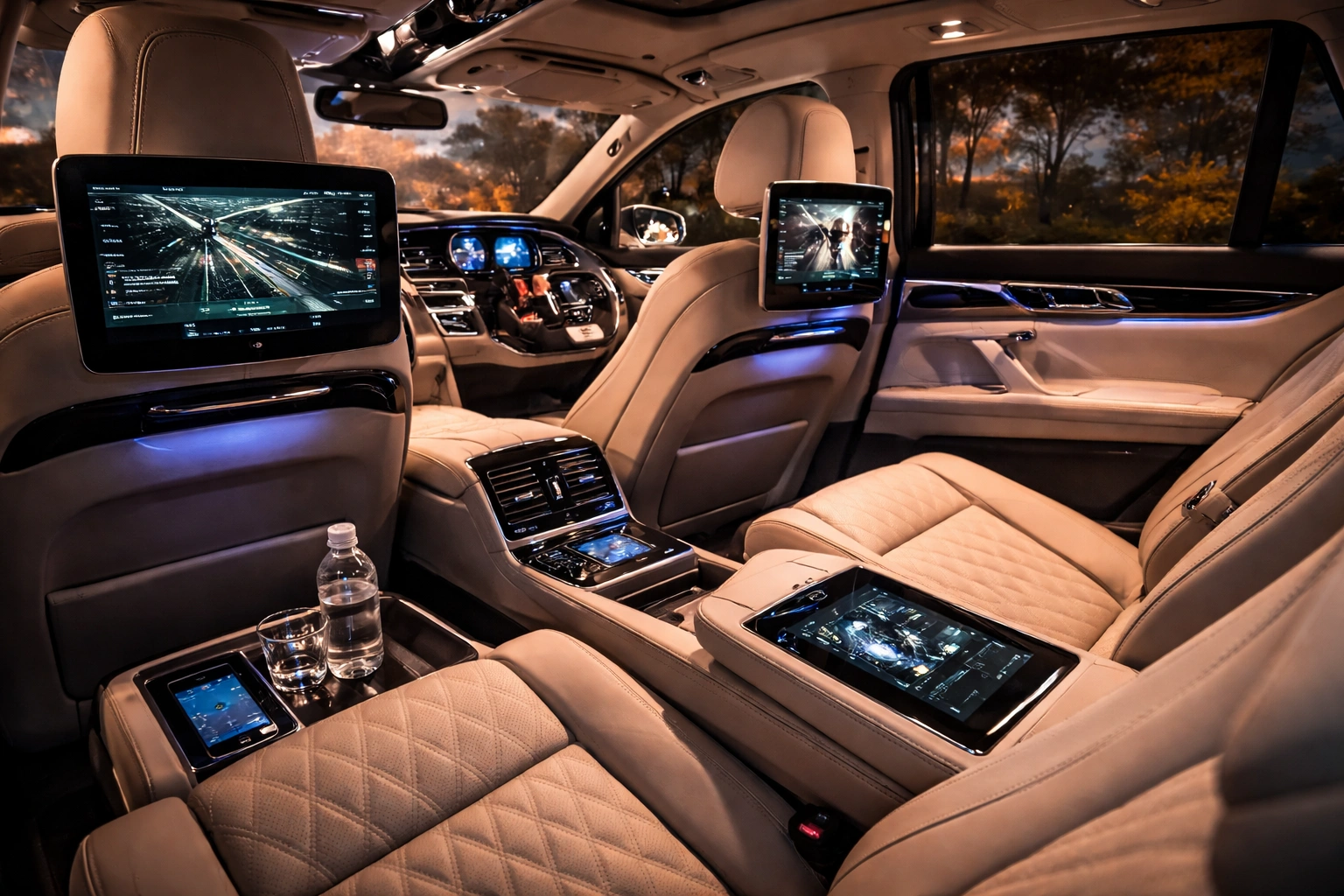
Modern executive sedans are built to provide exceptional comfort for passengers seated in the rear. Features such as reclining seats, ventilation, heating, and massage functions help passengers relax during long journeys.
These features are particularly valuable during airport transfers or city travel where passengers may spend extended periods inside the vehicle.
Rear passengers can also control seat adjustments, cabin lighting, and climate settings through dedicated touch panels.
This passenger-focused design ensures that luxury vehicles provide a comfortable and personalized travel experience.
Adaptive Suspension for Indian Road Conditions
Road conditions across India vary significantly. Smooth highways may quickly transition into uneven city streets, construction zones, or speed breakers.
To handle these conditions effectively, modern luxury vehicles use adaptive air suspension systems that automatically adjust ride height and damping.
These systems absorb road imperfections and maintain a stable cabin environment even when the vehicle encounters bumps or rough surfaces.
Passengers experience fewer vibrations and smoother ride quality compared to standard vehicles.
For luxury car rental services, adaptive suspension is one of the most valuable technologies for ensuring comfort during both urban and intercity travel.
Cabin Noise Insulation and Acoustic Comfort
Urban traffic noise is a common challenge in major Indian cities. Honking vehicles, construction activity, and crowded roads can quickly create a stressful travel environment.
Luxury vehicles address this issue through advanced acoustic engineering.
Double-glazed windows, improved insulation materials, and specialized door seals help reduce external noise entering the cabin.
Some premium cars even include active noise cancellation systems that neutralize unwanted sounds.
A quiet cabin environment allows passengers to relax, make phone calls, or work during transit.
For executives and professionals using chauffeur-driven luxury vehicles, acoustic comfort is one of the most valuable aspects of modern automotive design.
Advanced Driver Assistance Systems (ADAS)
Safety technology has become a defining feature of modern luxury vehicles.
Advanced Driver Assistance Systems, commonly known as ADAS, use sensors, cameras, and radar technology to assist drivers and improve road safety.
Key features include adaptive cruise control, lane-keeping assistance, blind-spot monitoring, and automatic emergency braking.
While dense urban traffic may limit some semi-autonomous functions, these technologies still provide valuable assistance during highway travel.
ADAS systems help drivers maintain safer distances and respond quickly to unexpected road situations.
Rather than replacing drivers, these systems support safer and more confident driving.
Climate Control Designed for Indian Weather
India experiences a wide range of weather conditions, from intense summer heat to heavy monsoon humidity.
Luxury vehicles are designed to maintain a comfortable cabin environment regardless of external weather conditions.
Modern premium cars feature multi-zone climate control systems that allow different passengers to adjust temperatures according to their preferences.
Rear-seat ventilation and seat cooling features provide additional comfort during hot weather.
Many luxury vehicles also include advanced air purification systems that filter dust and pollutants from incoming air.
For travelers in large metropolitan cities, these systems significantly improve cabin comfort during long journeys.
Digital Cockpit and Smart Connectivity
Modern luxury vehicles integrate advanced digital technology that enhances both driver and passenger convenience.
Fully digital instrument clusters display navigation, vehicle information, and driving data in a clear and customizable format.
Large infotainment screens allow access to music, communication tools, and navigation services.
Smartphone integration through Apple CarPlay and Android Auto ensures seamless connectivity with personal devices.
Passengers can easily control entertainment systems, climate settings, and vehicle features through intuitive interfaces.
When implemented thoughtfully, digital technology improves usability without overwhelming users.
Structural Safety and Passenger Protection
Safety engineering is a fundamental aspect of luxury vehicle design.
Premium cars feature reinforced body structures designed to absorb impact and protect passengers during collisions.
Multiple airbags, electronic stability control systems, and advanced braking technologies work together to improve vehicle safety.
Traction control systems also help maintain stability during challenging road conditions.
These technologies provide an additional layer of protection in unpredictable traffic environments.
For passengers traveling frequently on highways or in busy cities, strong safety architecture provides valuable reassurance.
Ambient Lighting and Cabin Personalization
Interior ambiance plays an important role in defining the luxury experience inside modern vehicles.
Ambient lighting systems allow passengers to adjust cabin lighting colors and brightness according to their preferences.
Subtle interior illumination creates a calm and sophisticated environment, especially during night drives.
Passengers can select lighting modes that match their mood or travel setting.
Personalization features may also include adjustable seat positions, memory settings, and customizable interior themes.
These small details enhance the feeling of comfort and individuality inside the vehicle.
How Luxury Technology Enhances the Travel Experience
Luxury car technology is designed not only for innovation but also for improving the overall travel experience.
Features such as smooth suspension systems, quiet cabins, and intelligent climate control reduce fatigue during long journeys.
Passengers can relax, work, or enjoy entertainment while traveling in a comfortable environment.
For business travelers, these features allow productive use of travel time.
For families or leisure travelers, they create a calm and enjoyable journey.
Modern luxury vehicles therefore function as mobile comfort spaces rather than simple transportation tools.
Why Luxury Vehicle Technology Matters for Chauffeur Services
For companies providing chauffeur-driven luxury car rental services, vehicle technology plays a major role in delivering a premium experience.
Advanced comfort features ensure that passengers remain relaxed during city travel or long airport transfers.
Safety technologies support chauffeurs by improving vehicle control and road awareness.
Digital systems allow better navigation and route planning in complex urban environments.
Together, these technologies help chauffeur services maintain high standards of reliability and comfort.
Passengers benefit from smoother journeys and a more refined travel experience.
Frequently Asked Questions
Is rear-seat comfort more important than engine power in India?
Ans:Yes. Since many luxury vehicles in India are chauffeur-driven, passenger comfort features are often more valuable than engine performance.
Do adaptive suspension systems improve ride quality on Indian roads?
Ans:Yes. Adaptive suspension systems help absorb bumps and uneven surfaces, significantly improving ride comfort.
Are ADAS safety systems fully effective in Indian traffic?
Ans:They assist drivers and improve safety but still require attentive driving due to unpredictable traffic conditions.
Is cabin noise insulation noticeable during city travel?
Ans:Yes. High-quality insulation reduces external noise, creating a quiet and relaxing cabin environment.
Why is climate control important in luxury cars in India?
Ans:Extreme temperatures and pollution levels make strong climate control and air purification systems essential for passenger comfort.
Conclusion
Modern luxury vehicles are defined not only by their appearance but also by the intelligent technologies that enhance comfort, safety, and travel convenience.
Features such as adaptive suspension, advanced climate systems, acoustic insulation, digital connectivity, and driver-assistance technologies transform everyday journeys into refined travel experiences.
In the context of Indian road conditions, true automotive luxury is measured by stability, passenger comfort, and safety rather than raw performance.
When these technologies work together seamlessly, they create a calm and enjoyable environment for both drivers and passengers.
For travelers seeking premium mobility solutions, luxury vehicles equipped with modern technology provide an unmatched combination of comfort, reliability, and sophistication.
📞 Call us: +91 9167977799
✉️ Write to us: info@rnk.com