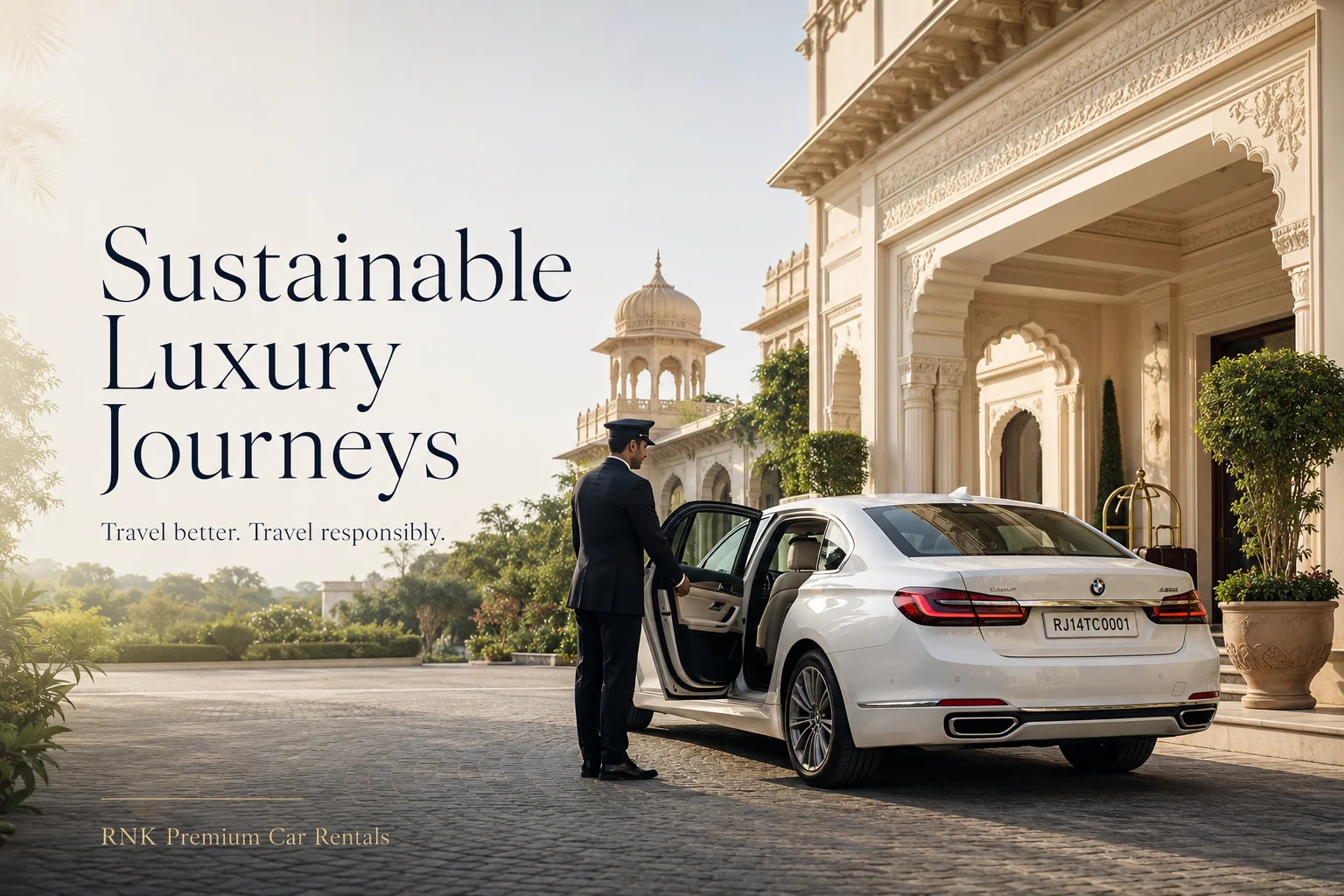
Sustainable & Experiential Luxury Travel Trends with Premium Chauffeurs
What if the next symbol of luxury travel is not having more—but experiencing something fewer people ever get to experience? A private breakfast with a view instead of a crowded buffet, an afternoon learning a traditional craft instead of racing through five attractions, or a silent chauffeur-driven journey through the countryside instead of another airport queue. Luxury travel is beginning to feel less about collecting expensive places and more about creating meaningful memories.
That shift is changing how premium travellers explore India. The new luxury holiday may combine an exceptional hotel with local food, heritage, wellness, nature and slower road travel, while sustainability influences everything from where guests stay to how they move between destinations. For HNIs, couples, families and international visitors, experiential luxury travel in India is increasingly about privacy, authenticity, comfort and a stronger connection with the destination.
This is not simply a lifestyle trend. India's Ministry of Tourism has a national strategy for sustainable tourism, while global luxury travel advisors are seeing growing interest in immersive experiences built around local crafts, destination farms, conservation and culture. Virtuoso's August 2026 sustainable-travel outlook specifically highlights experiences such as heritage crafts and locally rooted journeys as part of the direction luxury travel is taking.
The short answer: sustainable luxury travel is moving away from the idea that responsibility requires sacrificing comfort. Instead, premium travellers are choosing better-designed itineraries—fewer unnecessary transfers, meaningful local experiences, carefully selected properties, appropriate vehicles and professional chauffeurs who make slower, more intentional journeys easier to enjoy.
RNK's luxury travel services naturally fit this approach because premium mobility can become part of the itinerary rather than simply transportation between attractions.
Luxury Travel Is Moving From "More" to "Better"
There was a time when a luxury holiday was easy to recognise. The most expensive suite, the largest vehicle, a packed sightseeing schedule and several flights between destinations created the impression that more automatically meant better. The modern premium traveller is beginning to question that equation.
Why spend seven days checking into four hotels when two extraordinary properties might create a stronger holiday? Why fly between nearby destinations if a scenic road journey reveals more of the landscape? Why visit twelve attractions when a private cultural experience may become the one story everyone remembers years later?
Virtuoso's luxury-travel research has already shown affluent travellers responding to climate and crowding by considering shoulder seasons, less extreme weather and destinations away from overtourism. Its 2025 Luxe Report found that avoiding over-touristed places, supporting locally employing businesses and contributing to local communities were among the sustainable-tourism priorities affluent travellers were most likely to support.
This creates an interesting new definition of luxury: less rushing, fewer crowds and more access to experiences that feel genuinely connected to place.
Experiential Luxury Is About Stories You Cannot Buy Everywhere
The world's finest hotel can still be reproduced in another city. A locally rooted experience cannot.
That is why experiential travel is becoming so important. Travellers increasingly want moments that make sense only in the destination they are visiting—a private heritage walk through an old neighbourhood, meeting artisans who still practise regional crafts, dining around local produce, experiencing a plantation, discovering a quieter landscape or spending time with people whose work reflects the destination's culture.
Virtuoso's 2026 sustainable luxury trends highlight precisely this movement towards immersive travel, including heritage craft experiences and destination-based food and farming experiences. The attraction is not simply exclusivity. It is the feeling that the traveller has encountered something that could not have been copied and pasted into another destination.
For India, that opportunity is enormous. Rajasthan, Kerala, Ladakh, Goa, the Northeast and even major cities such as Mumbai and Delhi can all offer luxury experiences that become more interesting when travellers move beyond the obvious sightseeing checklist.
The New Luxury Traveller Wants to Feel the Destination
Imagine two Rajasthan holidays.
The first moves through Jaipur, Jodhpur and Udaipur as quickly as possible, photographing the main monuments before driving to the next hotel. The second spends longer in each city, includes a private craft experience, explores local cuisine, stays somewhere with architectural character and uses the road journey itself to understand how the landscape changes.
Both may cost similar amounts.
Only one truly feels experiential.
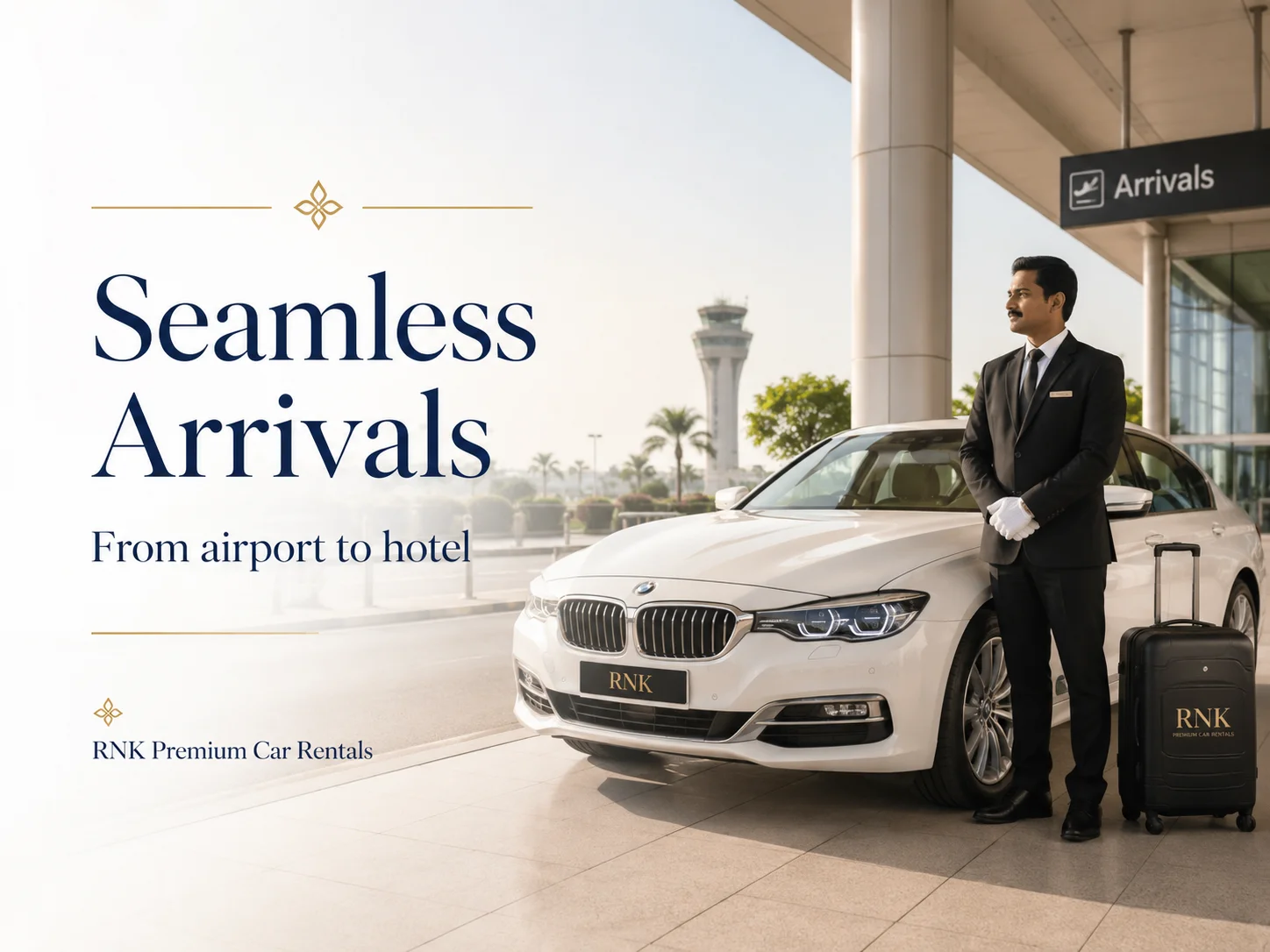
This is where premium chauffeur services in India can quietly improve the trip. When travellers do not need to drive, navigate, find parking or constantly arrange new transfers, the journey can slow down without becoming inconvenient. The chauffeur becomes the link between hotels, artisans, restaurants, private experiences and scenic stops.
Luxury stops being a series of bookings.
It becomes a continuous journey.
Slow Travel May Be One of Luxury's Most Important Trends
Slow travel does not necessarily mean travelling for a month.
It means giving a destination enough time to reveal itself.
A four-night stay at one exceptional property may provide more value than four one-night stays. A road journey through Kerala may reveal far more than repeatedly flying between cities. A longer lunch, an unplanned viewpoint stop or an afternoon spent at the hotel may ultimately become more memorable than one more attraction added to the itinerary.
This style of travel can also reduce unnecessary transport movements. Instead of constant airport transfers, short-haul flights and repeated hotel changes, an itinerary can cluster experiences geographically and make fuller use of one chauffeur-driven vehicle.
RNK's guide to sustainable luxury mobility trends in India explores how transportation itself is evolving alongside this broader shift towards more conscious premium travel.
Can a Chauffeur-Driven Holiday Actually Be More Sustainable?
The answer depends on how the journey is designed.
Simply placing the word "luxury" in front of transportation does not make it sustainable. A large vehicle carrying one passenger on unnecessary journeys is still resource-intensive. Sustainability improves when mobility is planned intelligently around passenger requirements, route efficiency and available vehicle technology.
A chauffeur-driven itinerary can reduce fragmented travel by keeping one appropriately sized vehicle with the travellers through several connected destinations. Routes can be grouped logically, unnecessary repositioning journeys can be reduced and passengers can avoid repeatedly arranging separate taxis or vehicles in every city.
The goal should therefore be smarter mobility, not sustainability claims based purely on marketing language.
RNK's guide to sustainable luxury car rentals and eco-friendly options looks more specifically at this evolving category.
Electric Mobility Is Beginning to Enter the Premium Travel Conversation
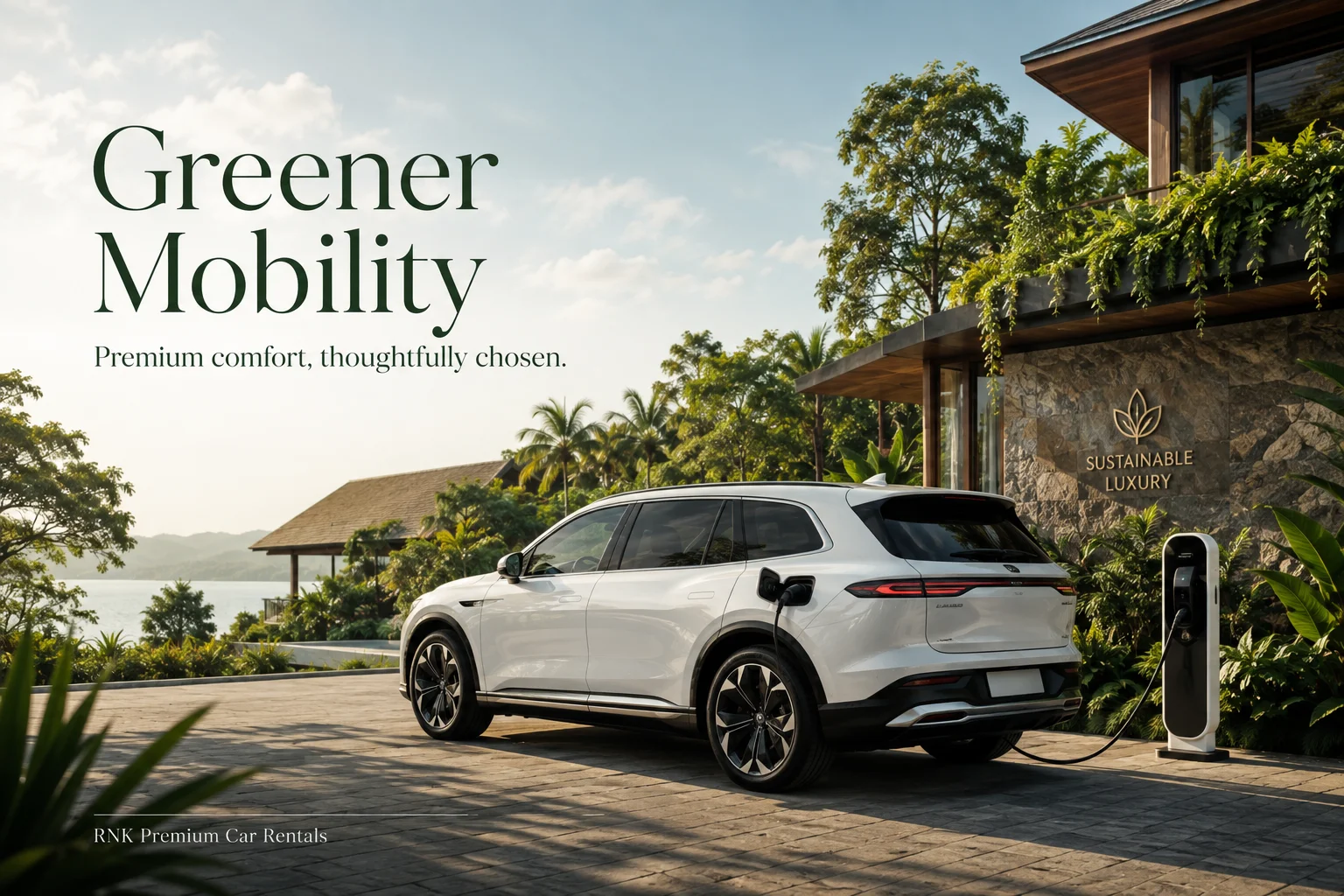
Electric vehicles are becoming increasingly relevant to sustainable travel in India. According to IBEF, EVs accounted for 8% of new vehicle registrations nationally in 2025, with 2.3 million electric vehicles sold during the year. By June 2026, overall EV penetration had crossed 12% for the first time in monthly retail data, reflecting the country's rapidly evolving electric-mobility ecosystem.
The premium end of the market is evolving as well. IBEF reported that luxury EV sales in India increased 66% year-on-year during the first five months of 2025, while electric vehicles represented an increasing share of luxury-vehicle sales.
For chauffeur-driven travel, this creates interesting opportunities on routes where charging infrastructure and itinerary length make electric mobility practical. RNK's BYD E6 electric vehicle provides an example of how electric vehicles can form part of premium ground transportation.
But the key phrase remains where practical.
Sustainable Luxury Does Not Mean Choosing an EV for Every Route
One of the easiest mistakes in sustainable travel is treating one solution as correct everywhere.
An electric vehicle can work extremely well for city travel, airport movements or suitable intercity routes where charging infrastructure is reliable. It may be less appropriate for a remote itinerary where charging availability creates significant detours or uncertainty.
The sustainable choice should take the complete journey into account. Sometimes that means an electric vehicle. Sometimes it means choosing a smaller vehicle instead of an unnecessarily large SUV. Sometimes it means keeping the same car for several days instead of repeatedly repositioning multiple vehicles.
Good sustainable mobility is therefore not about selecting the most fashionable technology.
It is about selecting the most sensible solution for the actual trip.
"Right-Sizing" the Vehicle Is an Underrated Luxury Trend
Premium travellers often assume that bigger automatically means better.
But a couple travelling with two suitcases may not need a large seven-seat SUV. A family of six should not squeeze into a vehicle simply because a sedan carries a more prestigious badge. The best vehicle is the one that comfortably meets the passenger, luggage and road requirements without unnecessary excess.
This idea of right-sizing is both practical and potentially more resource-conscious. Two smaller vehicles may make less sense than one spacious premium van for a family group, while a luxury sedan can be more appropriate than a large SUV for two passengers moving between city hotels.
The result is also a better passenger experience.
Sustainability and luxury do not always compete.
Sometimes the more efficient choice is simply the more intelligent one.
Premium Chauffeurs Make Experiential Travel Easier
The most interesting private experiences are rarely arranged directly beside a hotel lobby.
An artisan studio may be in another neighbourhood. A private dining experience may involve a rural property. A wellness retreat may sit outside the city. A scenic heritage route may require several hours of driving between destinations.
This is where a professional chauffeur becomes more valuable than a basic transfer service. The traveller can remain flexible without continuously thinking about where the next car will come from.
If an experience runs long, the journey adjusts.
If the group wants to stop somewhere unexpected, the itinerary has room to respond.
If the hotel changes, the transport relationship remains familiar.
That freedom allows experiential travel to remain spontaneous while still feeling professionally organised.
Responsible Luxury Also Means Supporting Local Places
Sustainability in tourism is larger than carbon emissions.
It includes where money is spent, how destinations are treated and whether tourism benefits the people who actually live there. Booking.com research has consistently shown strong traveller interest in authentic local experiences and supporting local culture, while Virtuoso has identified support for locally employing businesses and communities as priorities within sustainable luxury travel.
For premium travellers, this creates an opportunity to spend differently.
Instead of visiting only internationally recognised luxury brands, an itinerary might include independent restaurants, regional craftspeople, locally rooted guides, heritage properties or community-led experiences alongside the five-star elements of the trip.
That mix often creates a richer holiday.
The best luxury travel should not isolate travellers from the destination.
It should give them better access to it.
Shoulder-Season Luxury Is Becoming More Attractive
Luxury traditionally followed peak season.
The best-known destinations filled with travellers at exactly the same time, hotel prices climbed and iconic attractions became crowded.
Increasingly, premium travellers are discovering the advantages of travelling just outside those periods. Virtuoso's research found that affluent clients responding to climate change were commonly shifting towards shoulder seasons and choosing destinations with more moderate conditions.
For experiential travel, this makes enormous sense.
A quieter destination can create better private experiences, more relaxed road journeys and less pressure on popular locations. Hotels may feel calmer, restaurants easier to enjoy and heritage sites more atmospheric.
The new luxury flex may therefore not be visiting the most famous place during its busiest week.
It may be knowing when not to go.
Nature Is Becoming Part of the Luxury Itinerary
Nature-based luxury does not need to mean sacrificing comfort.
A premium trip can combine excellent accommodation with wildlife, forests, coastlines, mountains and conservation-focused experiences. The difference is that travellers increasingly want these environments to remain intact rather than being treated simply as backdrops for photographs.
This is one reason slower road travel can be appealing. Instead of moving repeatedly through airports, travellers experience the gradual transition between city and countryside, plains and mountains, or coast and forest.
RNK's chauffeur-driven outstation travel guide is relevant here because longer road journeys allow travellers to build experiences around landscapes rather than only around urban destinations.
A premium chauffeur can make remote-feeling travel comfortable without removing the sense of exploration.
Wellness and Sustainability Are Beginning to Overlap
Luxury wellness travel has traditionally centred on spa treatments, yoga, Ayurveda, food and rest.
The modern version increasingly extends that thinking into the entire journey.
A traveller who books a wellness retreat but spends the first day rushing through airports, navigating traffic and checking notifications about taxis has already introduced unnecessary stress into the trip. A slower chauffeur-driven arrival can make the transportation reflect the intention of the holiday itself.
India is particularly suited to this combination. The Ministry of Tourism continues to position wellness as an important part of India's tourism offering, while its 2025–26 annual reporting connects yoga, culture and tourism as part of India's broader visitor experience.
The journey towards wellness can therefore begin before the spa.
Privacy Is Becoming Part of Experiential Luxury
Mass tourism and private luxury operate according to different rhythms.
The premium traveller increasingly wants fewer queues, smaller groups and experiences that can adapt to personal interests. That may mean visiting somewhere earlier, travelling outside peak periods or arranging a private guide rather than joining a large scheduled tour.
Chauffeur-driven mobility supports this because the traveller controls departure times more easily.
There is no tour bus waiting.
No shared transfer.
No need to leave a beautiful place because thirty strangers have been told to meet at the coach.
Private mobility does not automatically create sustainable travel, but when combined with a thoughtfully designed itinerary it can create a slower, more personalised experience.
The luxury is having control over time.
Technology Will Make Premium Mobility Smarter
Sustainable luxury is not only about changing vehicles.
Technology can improve how vehicles are used.
Better itinerary planning can reduce unnecessary kilometres. Real-time traffic information can help chauffeurs avoid inefficient routes. Flight monitoring can reduce airport waiting and repositioning problems. Charging information can make EV journeys easier to plan.
The result is a premium travel experience that becomes more efficient without requiring the traveller to think about the technology behind it.
That is how good luxury works.
Complexity stays behind the scenes.
The traveller simply experiences a smoother journey.
What Will Luxury Travel Look Like Over the Next Few Years?
The most interesting shift may be that luxury becomes harder to identify from a photograph.
A traditional luxury holiday was obvious: expensive car, expensive hotel, expensive restaurant.
The next version may be quieter.
It could be spending three nights at an exceptional property instead of changing hotels every day. Travelling with one professional chauffeur instead of arranging seven unrelated transfers. Visiting an artisan privately. Choosing a regional restaurant. Travelling outside peak season. Taking an electric vehicle when the route genuinely supports it.
None of these choices looks particularly extravagant by itself.
Together, they can create a far more sophisticated journey.
Frequently Asked Questions
What is sustainable luxury travel?
Sustainable luxury travel combines premium comfort and personalised experiences with greater consideration for environmental impact, local communities, culture and destination preservation. It does not necessarily mean giving up luxury; it means designing luxury more responsibly.
What is experiential luxury travel?
Experiential luxury travel focuses on meaningful, personalised and destination-specific experiences rather than only premium accommodation or expensive products. Private cultural visits, local cuisine, wellness, nature and craft experiences can all form part of this style of travel.
Is sustainable luxury travel growing in India?
India has a national sustainable-tourism strategy, while EV adoption and interest in experience-led travel continue to expand. Luxury travellers are also increasingly exposed to global trends around local culture, conservation and slower travel.
Can chauffeur-driven travel be sustainable?
It can be made more resource-conscious through route optimisation, right-sized vehicles, fewer unnecessary transfers, efficient multi-day itineraries and EV use where charging infrastructure and route requirements make electric mobility practical.
Are electric cars suitable for luxury travel in India?
They can be suitable for city journeys and selected intercity routes where charging infrastructure supports the itinerary. The correct vehicle should always be chosen according to distance, passenger requirements and charging availability.
What is slow luxury travel?
Slow luxury travel prioritises fewer destinations, longer stays and more meaningful experiences. The aim is to experience a place deeply rather than maximise the number of attractions or hotels visited.
Why are private experiences becoming popular in luxury travel?
Private experiences give travellers more control over timing, privacy and personal interests. They also allow deeper engagement with local food, culture, nature, crafts and heritage than many standard group tours.
Why are premium chauffeurs useful for experiential travel?
A professional chauffeur allows travellers to move flexibly between hotels, private experiences and destinations without repeatedly organising transport. This makes slower and more spontaneous itineraries easier to manage.
Is an EV always the most sustainable luxury car choice?
Not necessarily. Route length, charging infrastructure, passenger requirements and vehicle utilisation all matter. Sustainable mobility should consider the complete journey rather than relying on one vehicle technology alone.
What are the biggest luxury travel trends for 2026?
Current luxury-travel signals include immersive local experiences, slower itineraries, avoidance of overtouristed destinations, community support, conservation, shoulder-season travel and growing consideration of lower-impact mobility.
Final Takeaway
What if the future of luxury is not about travelling farther, faster or bigger—but travelling better? That may be the most important change happening in premium tourism today.
The sustainable luxury traveller still wants an exceptional hotel, a comfortable car and memorable service. But those things are no longer enough on their own. The traveller also wants a story, a connection with the destination and the feeling that the holiday was designed rather than simply purchased.
That might mean meeting an artisan instead of visiting another shopping mall. Spending an extra night somewhere beautiful instead of rushing to another airport. Choosing a premium EV when the route makes sense, or using one appropriately sized chauffeur-driven vehicle throughout a carefully planned road journey.
The premium chauffeur becomes particularly interesting within this new form of travel because mobility connects everything else. The hotel, restaurant, craft experience, wellness retreat, countryside and next destination all depend on how easily the traveller can move between them.
When that movement is planned well, the entire journey becomes calmer.
And perhaps that is where sustainable and experiential luxury finally meet.
The future of luxury travel is not simply having access to more. It is having the freedom, time and intelligence to choose what is actually worth experiencing.