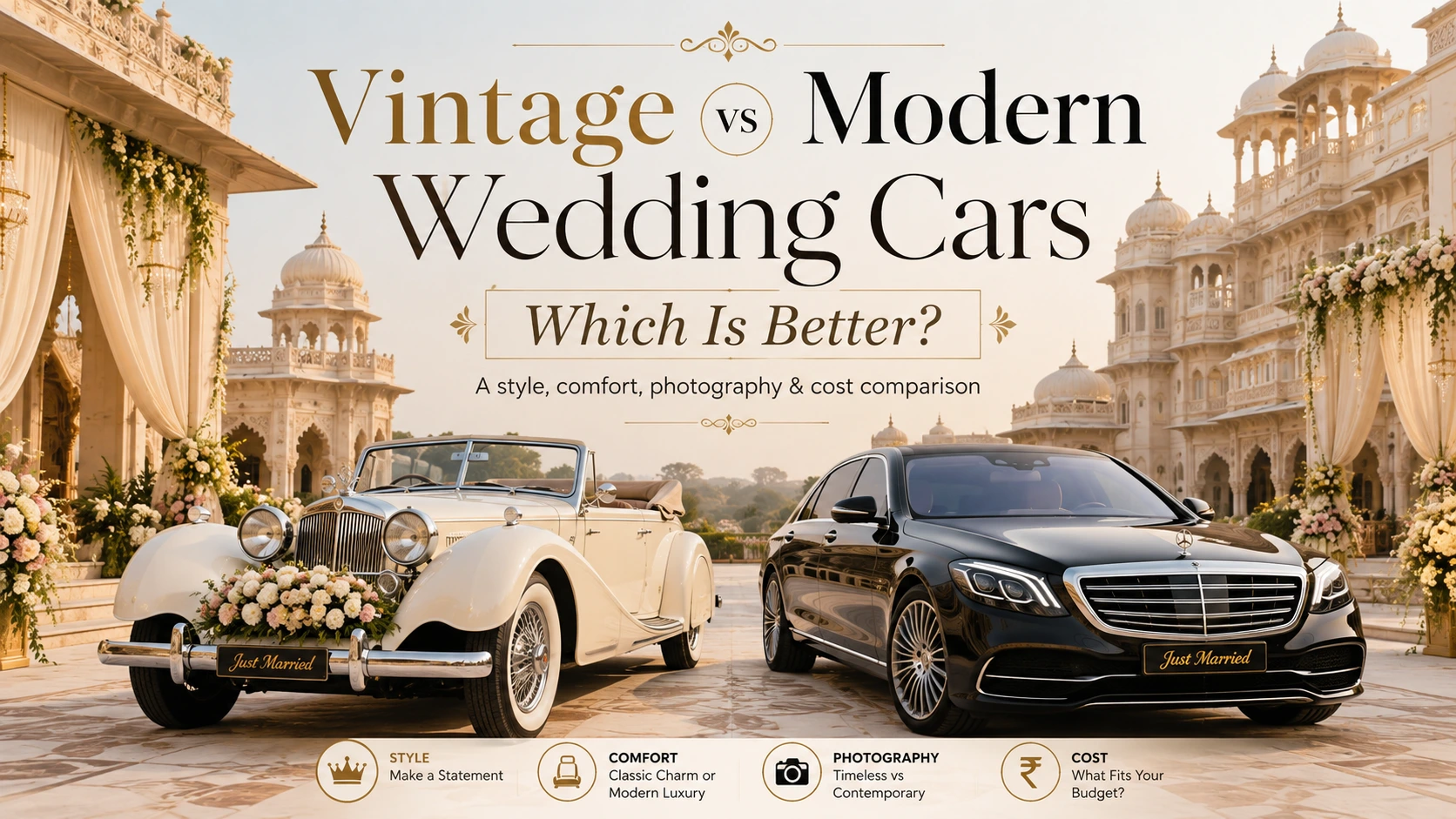
It's one of the first real style decisions a couple makes when planning their wedding transportation, and it comes up almost every time: vintage or modern? A beautifully restored classic car has a kind of timeless, story-driven charm that photographs unlike anything else. A modern luxury flagship has scale, presence, and a kind of unmistakable statement quality. Neither is objectively "better" — but each is genuinely better suited to different moments, aesthetics, and priorities, and understanding that distinction makes the decision much easier.
This guide breaks down how vintage and modern wedding cars actually compare — on looks, practicality, cost, and photography — so you can choose confidently rather than defaulting to whichever option a friend used.
The Core Difference: Character vs. Presence
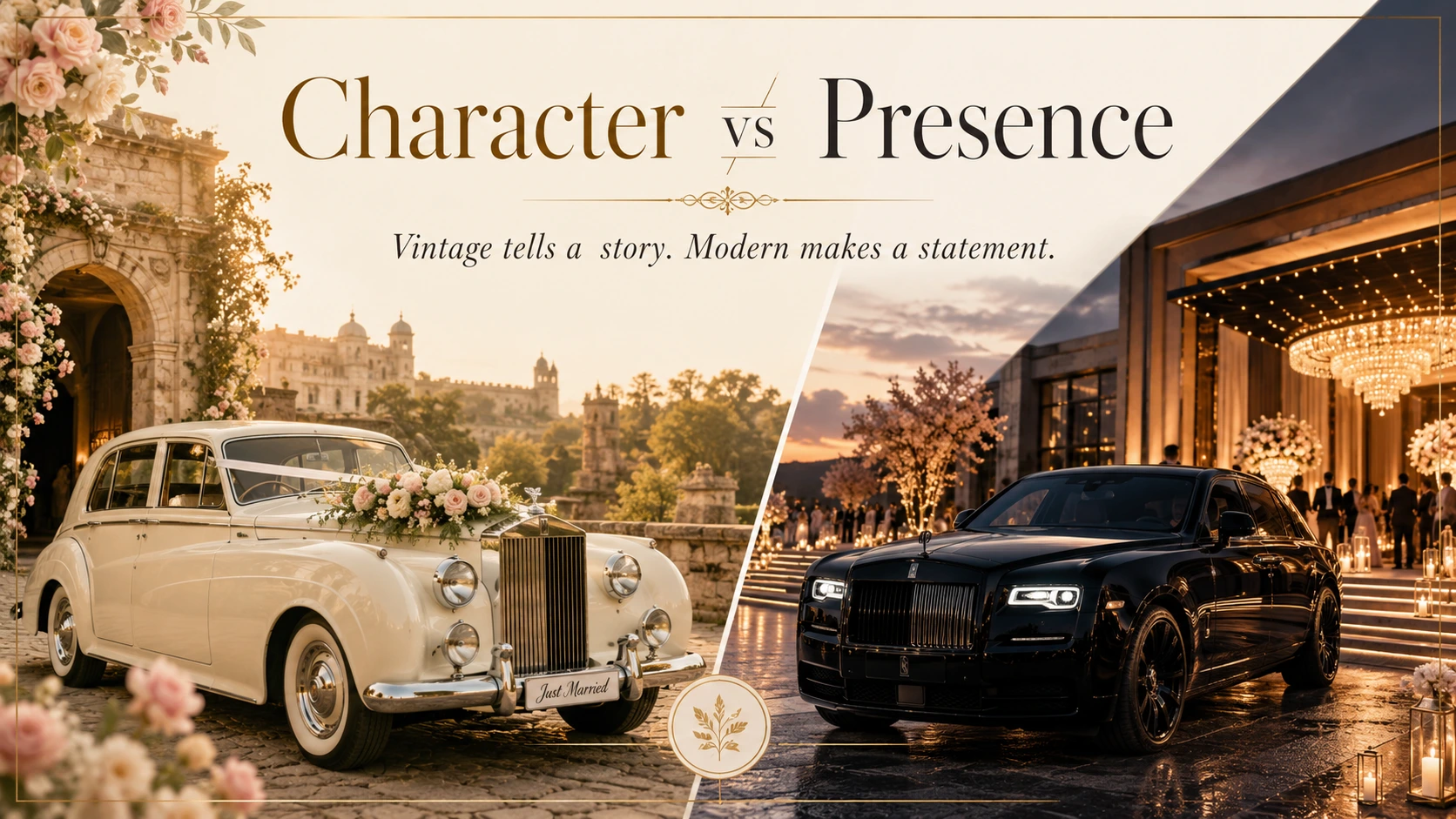
At the heart of the vintage-versus-modern decision is a simple distinction: vintage cars bring character and story, while modern luxury cars bring scale and presence.
A vintage car — a restored classic convertible or a decorated 1960s sedan — carries a sense of nostalgia and craftsmanship that feels personal and distinctive, precisely because no two vintage cars look quite the same and each has its own history. A modern flagship, by contrast, is instantly recognizable and communicates a very specific, universally understood kind of luxury the moment it pulls up — there's no need to explain what it represents. Our detailed comparison of Rolls-Royce versus vintage cars for weddings goes deeper into this exact contrast for couples specifically weighing a flagship modern car against a classic.
Neither quality is better in the abstract — it depends entirely on what feeling the couple wants their entry to create.
Vintage Wedding Cars: Strengths and Trade-Offs
Vintage cars have a well-earned reputation as the classic choice for Indian weddings, particularly for the baraat, and for good reason.
Where vintage wins: Open-top and convertible vintage models are genuinely better suited to a baraat procession, since they let the groom stay visible to a moving, dancing crowd throughout the journey rather than just at a single arrival point. They also carry a strong sense of tradition that many families specifically want reflected in the wedding's visual story, and they photograph with a warmth and character that's difficult to replicate with a modern car.
Where vintage falls short: These cars generally have less interior comfort than a modern luxury vehicle — smaller cabins, less climate control, and a driving experience built for a different era. They're also more limited in extended-route reliability; a vintage car handles a short, deliberate procession far better than a long, fast highway transfer. And because well-maintained vintage models are relatively rare, availability during peak wedding season books up quickly.
Modern Wedding Cars: Strengths and Trade-Offs
Modern luxury cars — flagship sedans, SUVs, and statement vehicles — offer a fundamentally different set of strengths, built around comfort, technology, and immediate visual impact.
Where modern wins: These vehicles offer genuinely superior comfort — climate control, quiet cabins, and smooth handling that matters especially for the bride's entry or the couple's getaway car after a long day. They're also far more versatile across the wedding: the same modern flagship can comfortably handle the ceremony entry, a reception arrival, and even outstation travel if the wedding spans multiple cities. And because manufacturers like Mercedes-Benz and Rolls-Royce continue expanding their India presence, availability across more cities has genuinely improved in recent years.
Where modern falls short: A modern luxury car, however striking, doesn't carry the same nostalgic or story-driven character a vintage model does — it communicates prestige rather than personality. For a full baraat procession specifically, modern statement cars also aren't built for extended slow-speed crowd driving the way an open-top vintage car is, which is why most providers recommend using them for a single final-approach moment rather than the whole route. Our guide to the best luxury cars for baraat entry covers this pacing consideration in more detail.
Comparing the Two for Specific Wedding Moments
Rather than picking one style for the entire wedding, many couples find the better approach is matching each specific moment to whichever style suits it best.
For the baraat procession, vintage generally wins on practicality and tradition, while a modern flagship works best reserved for a striking final approach. For the bride's ceremony entry, both styles work well depending on the aesthetic — a vintage car suits a more classic, romantic visual story, while a modern flagship suits couples going for a sleek, contemporary look. For the getaway car, modern almost always wins on pure comfort — after a long, emotionally intense day, the climate control and smoother ride of a modern luxury car matters more than visual character. And for guest and family transportation, modern vehicles are the practical choice across the board, given comfort, capacity, and reliability over a multi-day event.
Our wedding car rental checklist walks through exactly how to plan this vehicle-by-moment matching across your full wedding timeline.
Cost Comparison: Vintage vs. Modern
Cost is often assumed to favor one style over the other, but the real picture is more nuanced than "vintage is cheaper" or "modern is more expensive."
Vintage cars, particularly rare, well-maintained models, can actually command a premium comparable to or exceeding a modern luxury sedan, purely due to scarcity and the specialized maintenance these vehicles require. Modern luxury flagships have a wider price range depending on model — an entry-level luxury sedan may cost meaningfully less than a rare vintage convertible, while a true flagship like a Rolls-Royce sits well above most vintage options. Our wedding car rental cost guide for Mumbai breaks down real pricing factors that apply to both categories, regardless of which city you're booking in.
The honest takeaway: budget by the specific model and moment you're booking for, not by assuming one style is categorically cheaper.
Photography and Video: What Actually Looks Better on Camera
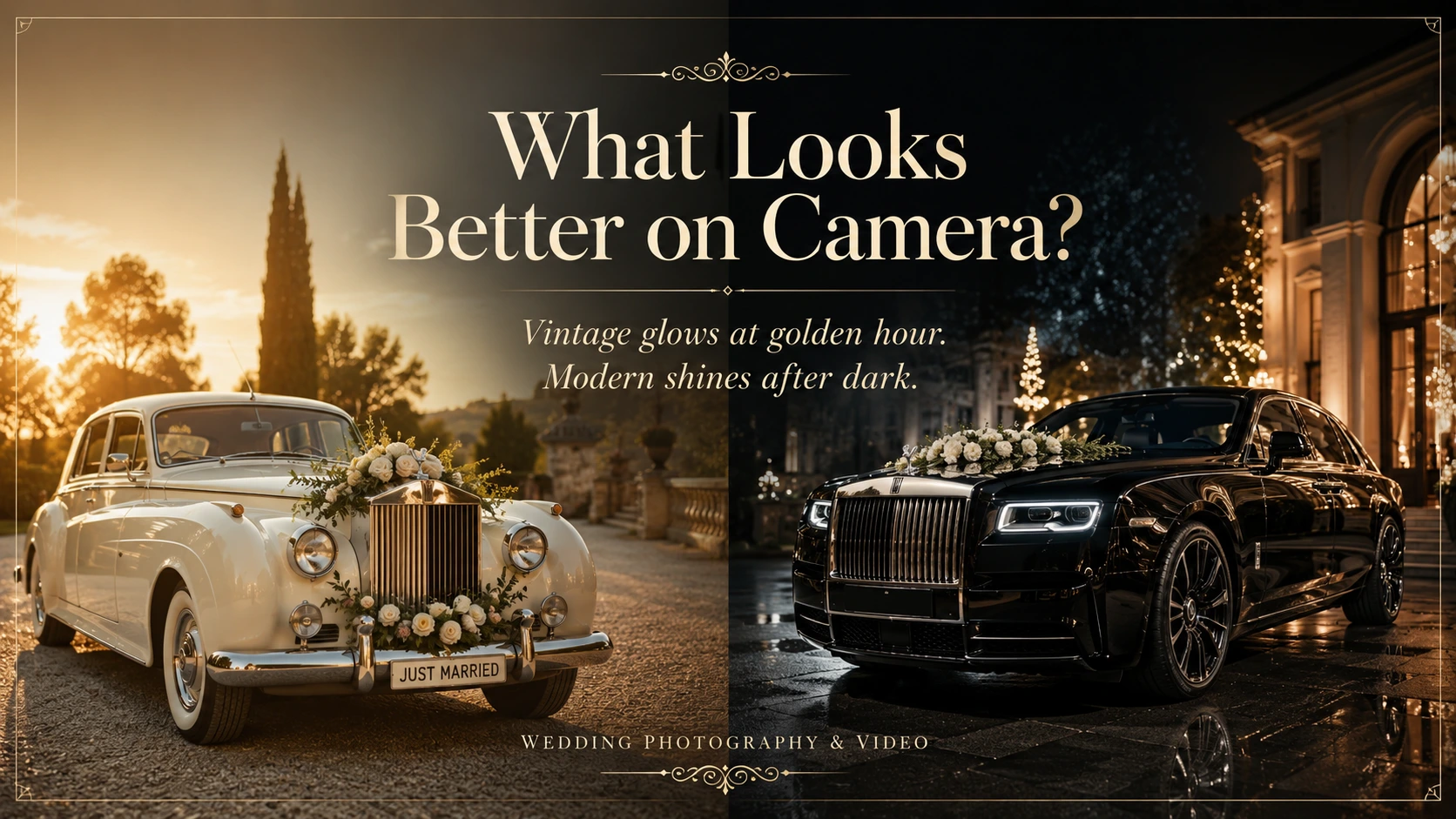
This is often the deciding factor for couples, and the honest answer is that both styles photograph beautifully — they just create very different visual moods.
Vintage cars tend to photograph with warmth, texture, and a timeless quality — they work exceptionally well with golden-hour lighting and softer, more romantic photography styles. Modern luxury cars photograph with sharpness, scale, and a sense of drama — they suit bold, high-contrast photography and videography, particularly evening shots where reflective surfaces and clean lines catch light dramatically. Our wedding car decoration rules and ideas guide has specific tips for styling each type of car so it photographs at its best rather than looking cluttered.
The Hybrid Approach: Why Many Couples Choose Both
Increasingly, couples aren't choosing one style over the other — they're using vintage for tradition-heavy moments and modern for comfort- and statement-driven ones, within the same wedding.
A common structure: a decorated vintage car for the baraat procession itself, a modern flagship for the couple's post-wedding getaway, and a mix of modern vehicles for guest and family transport throughout. This gives couples the visual story of tradition where it matters most, without asking a single vehicle type to do a job it isn't well suited for across the entire event. Our luxury transportation planning guide for big fat Indian weddings and full wedding and event transport service page both cover how to plan this kind of mixed fleet properly.
How to Decide: Questions to Ask Yourself
A few honest questions can make this decision much easier than debating it in the abstract.
Does the wedding's overall aesthetic lean traditional and romantic, or sleek and contemporary? Is the baraat a full, extended procession, or a shorter, more contained moment? How much does comfort matter for the specific vehicle in question — is it a five-minute ceremonial entry, or a longer drive where climate control and cabin quality genuinely matter? And is availability a concern — would a specific rare vintage model realistically be bookable for your date, or does that push you toward a more readily available modern option?
Answering these for each specific moment, rather than trying to pick one universal answer for the whole wedding, tends to produce a much better result.
Frequently Asked Questions
Is a vintage car or a modern luxury car better for a baraat? Vintage cars are generally better suited to a full, extended baraat procession, since open-top models let the groom stay visible to the crowd throughout. Modern statement cars work better reserved for a single, striking final approach rather than the whole route.
Which is more expensive, vintage or modern wedding cars? It depends on the specific model — rare, well-maintained vintage cars can cost as much as or more than a modern luxury sedan, while a true modern flagship sits at the higher end of both categories.
Can we use both vintage and modern cars in the same wedding? Yes, and it's an increasingly popular approach — many couples use a vintage car for the baraat procession and a modern flagship for the getaway or guest transport, matching each vehicle style to the moment it suits best.
Which style photographs better for wedding videography? Both work well but create different moods — vintage cars suit warmer, more romantic photography styles, while modern luxury cars suit bold, high-contrast, dramatic shots, particularly in evening light.
Is vintage car availability a concern for peak wedding season? Yes — well-maintained vintage models are relatively rare and tend to book up quickly during peak season, so they're worth confirming as early as any modern statement vehicle.
The Bottom Line
Vintage and modern wedding cars aren't really competing for the same job — they each bring a different kind of impact to different parts of a wedding. The couples who get the best result are usually the ones who match the vehicle to the specific moment, rather than picking one style and using it everywhere. Whether that means a vintage baraat car and a modern getaway, or committing fully to one aesthetic throughout, the right choice comes down to the story you want your wedding day to tell.
Still deciding between vintage and modern for your wedding? Get in touch with our team to talk through what fits your venue and style, or explore the full RNK fleet to see both vintage and modern options available for your date.