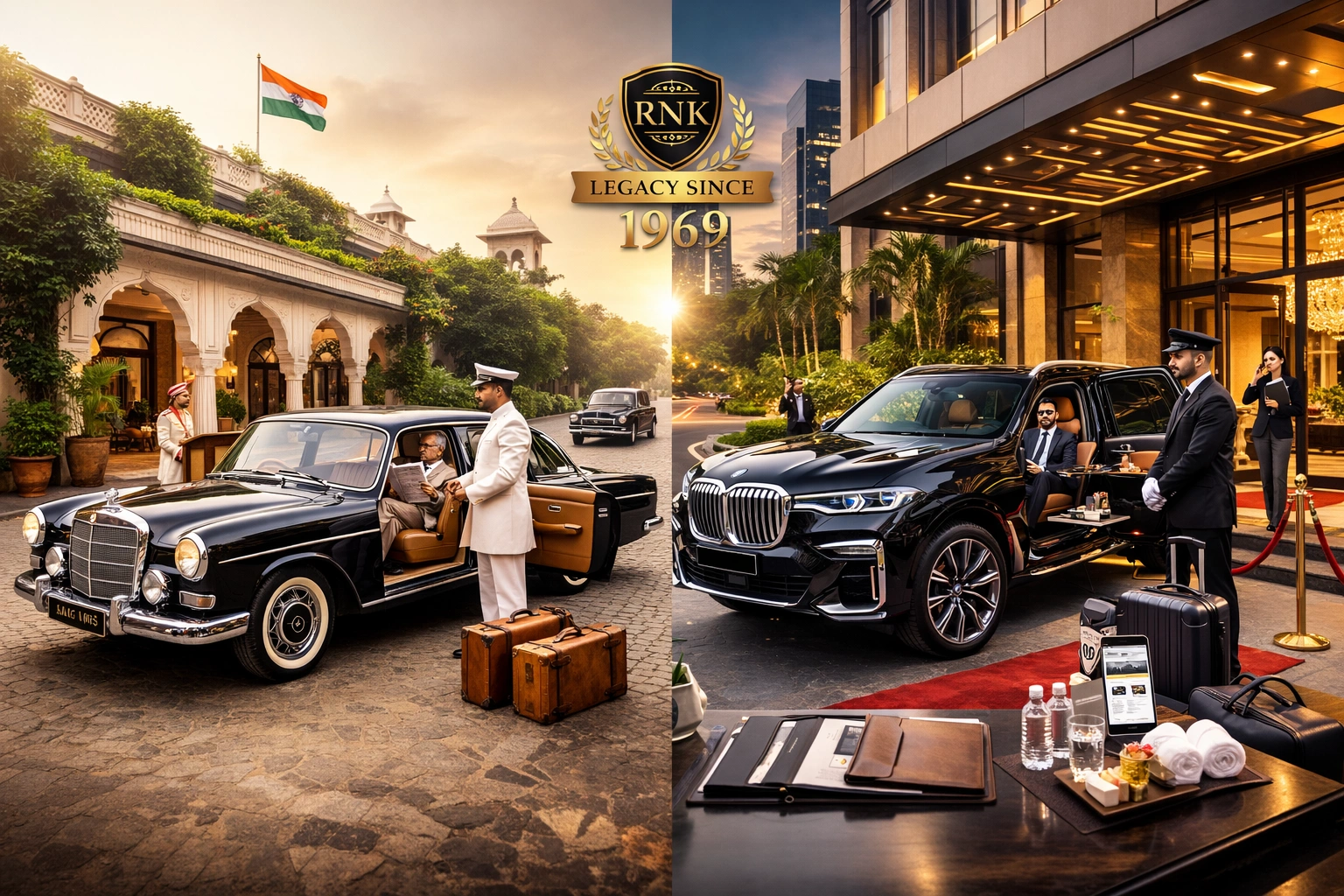
RNK’s Luxury Mobility Legacy Since 1969
Operating a luxury chauffeur service in India for more than five decades requires more than simply maintaining a fleet of premium vehicles. Long-term success in the luxury mobility industry reflects operational discipline, consistent service standards, and the ability to adapt to technological and regulatory changes.
Since 1969, India’s road transportation ecosystem has evolved significantly. Highway infrastructure expanded, digital navigation systems replaced manual route planning, and commercial vehicle compliance frameworks became more structured.
Companies that successfully navigated these changes demonstrate strong operational maturity and long-term reliability in the premium ground transportation industry.
Clear Answer
RNK’s legacy since 1969 represents decades of chauffeur expertise, luxury fleet evolution, corporate mobility experience, and operational discipline. The longevity of a luxury mobility company in India reflects reliability, adaptability, and trusted service across executive travel, VIP transportation, and wedding mobility services.
Understanding this legacy provides insight into how professional chauffeur services operate behind the scenes.
From Classic Chauffeur Culture to Professional Luxury Mobility
In the early decades of luxury transportation in India, chauffeur services operated through personalised relationships between drivers and clients. Fleet sizes were smaller, and bookings were often coordinated through direct communication rather than digital systems.
Road travel during this time required deep regional knowledge because highway infrastructure was limited. Professional chauffeurs relied heavily on route familiarity and local navigation experience to transport clients across cities and states.
Over time, the luxury car rental industry in India gradually transitioned toward structured fleet operations. Booking coordination, driver training programs, and vehicle maintenance systems became more standardised.
This shift marked the beginning of modern premium mobility services, where professional operations replaced informal chauffeur arrangements.
Evolution of Luxury Car Fleets in India
The concept of luxury vehicles has changed dramatically over the past five decades. Earlier premium fleets primarily consisted of classic sedans that offered comfort but lacked the advanced safety features and digital technology found in modern luxury cars.
As India’s corporate sector expanded and international travel increased, client expectations evolved. Executives and VIP travellers began expecting vehicles that matched global luxury transportation standards.
Today’s luxury chauffeur fleets typically include premium vehicles such as Mercedes-Benz S-Class sedans, BMW 7 Series executive cars, and Range Rover luxury SUVs designed specifically for chauffeur-driven travel.
Maintaining these vehicles requires specialised servicing, trained technicians, and consistent fleet upgrades to ensure that passengers experience the highest standards of comfort, safety, and reliability.
The Role of Professional Chauffeurs in Luxury Mobility
A luxury chauffeur service is defined not only by its vehicles but also by the professionalism of its chauffeurs. Driving skills alone are not enough for high-end mobility services.
Professional chauffeurs must understand passenger etiquette, executive travel expectations, route planning, and time-sensitive scheduling. These skills are particularly important when transporting corporate executives, diplomats, and high-profile guests.
Over the years, chauffeur roles expanded significantly. Modern chauffeurs assist with airport coordination, VIP guest management, wedding event logistics, and long-distance executive travel.
Companies that invest in chauffeur training and behavioural standards consistently deliver a superior passenger experience.
Adapting to India’s Changing Transportation Regulations
Operating a commercial luxury car rental service in India requires strict compliance with evolving government regulations. Over the past several decades, the regulatory environment has become increasingly structured.
Transport operators must comply with interstate permits, insurance documentation, commercial vehicle taxation, and emission regulations. These compliance requirements ensure safety and standardisation across the industry.
Technological initiatives such as FASTag electronic toll systems and digital vehicle documentation have also changed the way mobility companies operate.
Legacy operators that maintain strong compliance systems demonstrate long-term stability and operational discipline within the industry.
Growth of Corporate Chauffeur Services in India
Corporate travel has become one of the most important segments of the luxury mobility industry. As multinational companies expanded their presence in India, the demand for reliable executive transportation increased significantly.
Business travellers require punctual airport transfers, professional chauffeurs, and vehicles that provide a comfortable environment for work or relaxation during transit.
Executive mobility services must also provide consistent billing systems, predictable service standards, and reliable coordination for international clients.
Companies that specialise in corporate chauffeur services often build long-term relationships with organisations that rely on dependable transportation for visiting executives and board-level meetings.
Luxury Wedding Car Rentals and Event Transportation
Indian weddings have evolved into large-scale celebrations involving multiple venues, elaborate ceremonies, and large guest lists. Luxury vehicles play a prominent role in these events.
From groom entry vehicles to VIP guest transportation, luxury car rental serviceshelp create memorable arrival experiences. Wedding mobility services must coordinate closely with event planners to ensure smooth transportation schedules.
Behind the scenes, this coordination requires precise planning, backup vehicles, and experienced chauffeurs who understand ceremonial timing.
Mobility providers with long-term event experience are better equipped to manage the complexities of multi-day wedding celebrations.
Technology Transforming the Luxury Mobility Industry
Technology has significantly improved the efficiency of luxury car rental services. Modern mobility operations now use GPS tracking, digital booking platforms, and centralised dispatch systems.
These tools allow fleet managers to monitor vehicle locations, optimise routes, and coordinate chauffeur assignments more efficiently.
However, technology alone does not define premium mobility services. Personal service and human coordination remain essential for delivering high-quality chauffeur experiences.
The combination of technology and personalised service creates the most reliable luxury transportation systems.
What Long-Term Legacy Means in Luxury Transportation
Operating continuously for decades reflects more than just business longevity. It indicates a company’s ability to maintain consistent service standards while adapting to industry changes.
Sustained operations require financial discipline, regular fleet upgrades, and strong client relationships built over time.
In the luxury mobility sector, reputation is often built gradually through consistent service delivery rather than short-term marketing efforts.
Companies with long operational histories typically demonstrate strong organisational resilience and a commitment to maintaining premium travel standards.
Why Legacy Matters When Choosing a Luxury Car Rental
When clients choose a luxury chauffeur service, reliability becomes one of the most important factors. Long-established mobility providers often have the experience necessary to handle complex travel requirements.
Corporate travellers, wedding planners, and VIP guests rely on transportation partners who understand timing precision and service etiquette.
Legacy organisations bring decades of operational knowledge that helps ensure smooth travel experiences across different cities and events.
This experience often translates into higher levels of professionalism and trust.
Frequently Asked Questions
Does operating since 1969 guarantee service quality?
Ans:Longevity alone does not guarantee quality, but it often reflects strong operational discipline and consistent customer relationships over time.
How has luxury car rental changed in India?
Ans:The industry evolved from small chauffeur-run fleets to highly structured premium mobility services with corporate systems and compliance standards.
Are modern chauffeurs more professionally trained?
Ans:Yes. Today’s luxury chauffeurs receive training in etiquette, safety protocols, and corporate travel expectations.
Has technology replaced traditional chauffeur services?
Ans:No. Technology improves operational efficiency but personalised service remains essential in luxury transportation.
Why is legacy important in the mobility industry?
Ans:Because long-term service builds trust, reliability, and operational expertise that cannot be replicated quickly.
Conclusion
The RNK luxury mobility legacy since 1969 reflects decades of professional chauffeur service, continuous fleet evolution, and operational discipline within India’s transportation industry.
From classic chauffeur-driven sedans to modern executive vehicles, the journey illustrates how premium mobility services adapt to changing travel expectations while maintaining consistent service standards.
True luxury transportation is built through experience, reliability, and long-term commitment to customer service. In the world of premium ground mobility, legacy represents trust that has been proven across generations.
📞 Call us: +91 9167977799 ✉️ Email: info@rnk.com