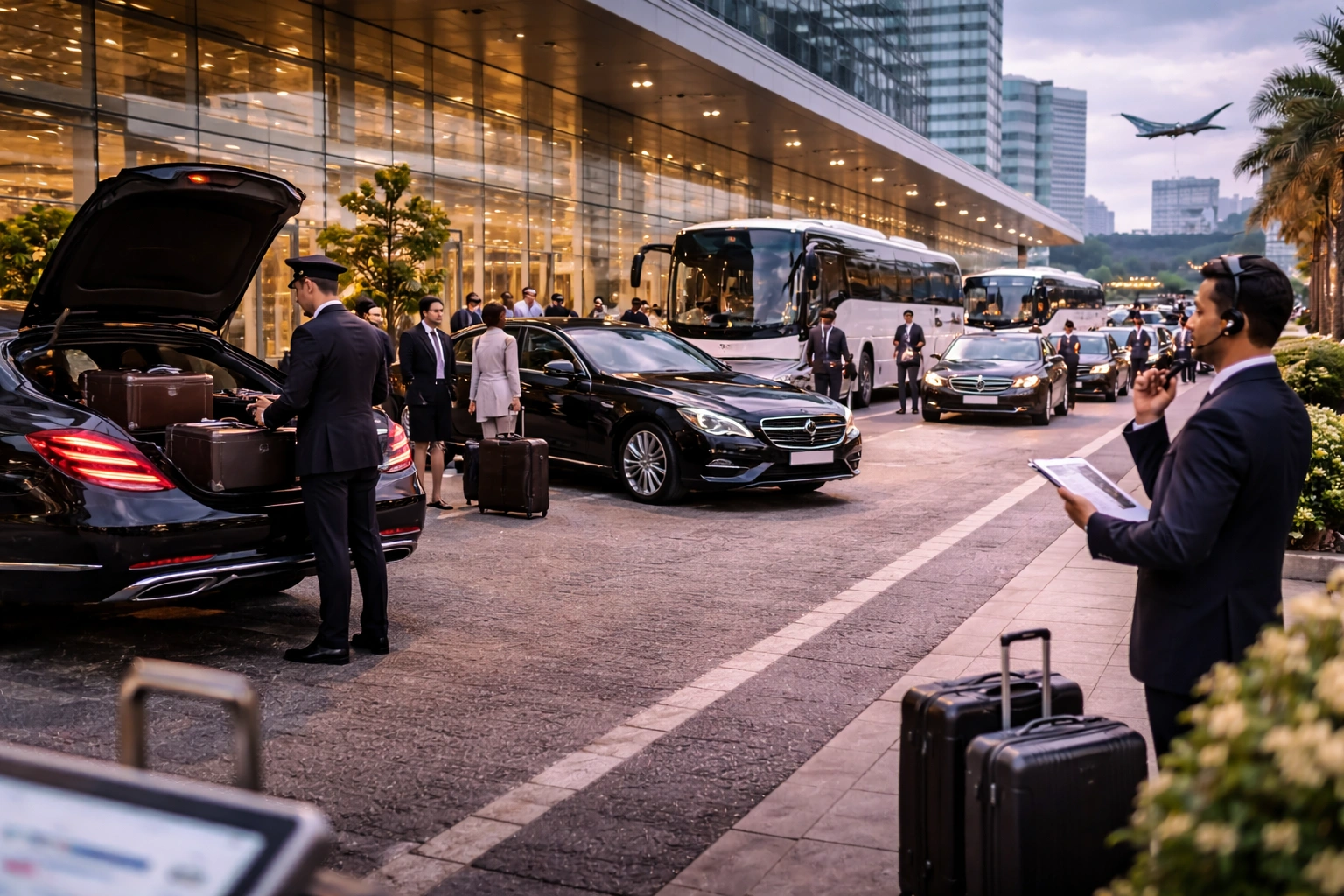
Corporate Event Transportation Planning in India
“We are organising a corporate event with senior leadership, clients, and 500+ attendees. How do we plan transportation professionally?”
Corporate events in India have evolved into highly structured and large-scale operations involving hundreds of participants. From leadership summits and investor meetings to product launches and conferences, these events require careful planning across multiple operational areas. Among these, transportation remains one of the most critical yet often underestimated components.
When transportation is not managed properly, even a well-organised event can face serious disruptions. Delays in airport pickups, confusion at hotel transfers, congestion at venue entrances, and mismanaged departure schedules can affect the overall experience of attendees. For senior leadership and VIP guests, such issues can negatively impact their perception of the organisation hosting the event.
Professional transportation planning ensures that every attendee category moves smoothly between locations. It creates a structured flow where arrivals, transfers, and departures happen without unnecessary waiting or confusion. For large-scale events with more than 500 attendees, transportation becomes less about vehicles and more about coordination and control.
When executed correctly, corporate event mobility supports punctuality, enhances guest experience, and reinforces the organisation’s brand image.
Clear Answer Upfront
Corporate event transportation in India requires a structured and strategic approach rather than ad-hoc vehicle booking. It involves attendee segmentation, fleet planning based on guest categories, real-time airport coordination, staggered arrival scheduling, traffic buffer management, and central command oversight.
Successful transportation planning ensures that VIP guests receive priority mobility, large attendee groups move efficiently through shuttle systems, and congestion at venues is minimised through controlled vehicle flow. Departure planning is equally important to maintain smooth exit movement after the event.
The goal is not to increase the number of vehicles but to optimise how those vehicles are used. Effective coordination and disciplined execution ensure that transportation supports the event rather than disrupts it.
Begin With Attendee Segmentation
The foundation of corporate event transportation planning lies in clearly categorising attendees. Not all guests have the same expectations, schedules, or travel requirements. Senior executives, board members, keynote speakers, sponsors, and general attendees each require different levels of mobility support.
VIP guests such as CXOs and keynote speakers typically require dedicated vehicles with personalised pickup and drop services. These guests often have tight schedules and may need direct transfers between the airport, hotel, and event venue. Providing them with independent transportation ensures flexibility and punctuality.
On the other hand, general attendees can be grouped into shuttle-based transport systems. This approach is more efficient for large groups and helps reduce the total number of vehicles required. Proper segmentation ensures that resources are allocated efficiently and prevents unnecessary overlap in transportation services.
Selecting the Right Fleet Mix
Choosing the correct fleet mix is essential for balancing efficiency and comfort. Different categories of vehicles must be allocated based on attendee roles and travel patterns.
Luxury sedans and premium SUVs are typically reserved for VIP guests, executives, and keynote speakers. These vehicles provide privacy, comfort, and flexibility, which are essential for high-level attendees. For small groups or sponsor teams, premium vans or multi-purpose vehicles offer a practical solution.
For large groups, shuttle buses or coaches remain the most efficient option. They reduce the number of vehicles on the road and simplify coordination by moving multiple attendees together. A well-balanced fleet mix ensures smooth operations without creating unnecessary congestion.
The focus should always be on operational efficiency rather than simply increasing the number of vehicles.
Coordinating Airport Transfers for Delegates
Airport transfers are often the most sensitive part of event transportation planning. Delegates may arrive from different cities or countries at various times, making coordination more complex.
Professional event transport teams track flight schedules in real time and assign vehicles based on actual arrival times. This approach helps avoid early reporting or unnecessary waiting charges. Terminal coordination is also critical, especially in large airports where domestic and international terminals are separate.
Dedicated airport coordination teams ensure that arriving guests are received smoothly and transferred to their hotels or venues without delays. Clear communication between passengers and chauffeurs plays a key role in maintaining efficiency.
Well-managed airport transfers create a positive first impression for event attendees.
Staggered Arrival Scheduling
Allowing all attendees to arrive at the venue simultaneously can lead to congestion at entry points, security checks, and parking areas. Staggered arrival scheduling helps distribute vehicle flow across different time slots.
VIP guests can be scheduled to arrive closer to the start of the event, while early arrivals can be directed toward networking areas or waiting lounges. This approach reduces pressure on venue infrastructure and ensures a smoother entry process.
Staggering arrivals also improves overall guest experience by reducing waiting time and congestion. It allows event organisers to maintain control over movement patterns rather than reacting to crowd build-up.
Traffic Buffer and Route Planning
Traffic conditions in Indian cities can change rapidly due to congestion, construction work, or unexpected road closures. Event planners must therefore prepare realistic travel buffers and identify alternate routes.
Professional transport teams analyse traffic patterns and plan routes accordingly. They also monitor real-time updates to adjust travel plans when necessary. For VIP movements, additional precautions such as escort vehicles or controlled routing may be required.
Effective route planning ensures that transportation schedules remain reliable even under unpredictable conditions.
Establishing a Central Transport Command Desk
For large events, a central command desk acts as the operational backbone of transportation management. This control centre monitors all vehicle movements and coordinates communication between drivers, event organisers, and attendees.
The command desk handles pickup confirmations, delay updates, vehicle reallocations, and emergency responses. It ensures that any disruption is addressed immediately before it affects the overall schedule.
Without a central coordination system, small delays can quickly escalate into major logistical issues. A command desk provides the structure needed to manage complex transportation operations efficiently.
Venue Access and Parking Coordination
Event venues often have limited parking capacity and restricted access points. Without proper planning, vehicles can accumulate at entry gates, causing congestion and delays.
Professional planners designate specific drop-off zones and holding areas for vehicles. Chauffeurs are instructed to exit immediately after passenger drop-off to keep traffic flowing smoothly.
Parking coordination ensures that the venue remains organised and accessible throughout the event. It also enhances the overall visual professionalism of the event setup.
Departure Planning After the Event
Transportation planning must continue even after the event concludes. Departure logistics are often overlooked, but they are equally important for maintaining a positive guest experience.
Guests should be grouped into departure waves based on their category and destination. VIP guests are usually prioritised, while shuttle systems handle large attendee groups efficiently.
Clear communication and scheduling help prevent confusion during departure. When managed properly, the event concludes smoothly without delays or crowding at exit points.
Technology and Real-Time Tracking
Modern corporate events increasingly rely on technology for transportation management. GPS tracking, mobile coordination tools, and real-time communication platforms allow organisers to monitor vehicle movements continuously.
These systems provide visibility into driver locations, estimated arrival times, and potential delays. Event organisers can make quick decisions and adjust plans as needed.
Technology enhances control and reduces uncertainty, making it an essential component of large-scale event transportation planning.
Risk Management and Contingency Planning
Unexpected challenges such as weather disruptions, traffic incidents, or last-minute schedule changes can affect transportation plans. Professional event transport teams prepare contingency strategies in advance.
Backup vehicles, alternate routes, and flexible scheduling help mitigate these risks. Having a structured contingency plan ensures that operations continue smoothly even under unexpected conditions.
Preparedness is key to maintaining reliability during large corporate events.
Frequently Asked Questions
Q1. How early should transportation planning begin for corporate events?
Planning should begin at least three to six weeks in advance for large events.
Q2. Is a transport coordinator necessary?
Yes, especially for events with more than 100 attendees.
Q3. Are shuttle buses better for large groups?
Yes, they reduce vehicle count and improve coordination.
Q4. Should VIP transportation be separate?
Yes, VIP mobility should always be managed independently.
Q5. Is airport flight tracking necessary?
Yes, it ensures accurate pickup timing.
Q6. How can traffic delays be managed?
By using buffer time and alternate route planning.
Q7. What is a transport command desk?
It is a central coordination hub for managing vehicles and communication.
Q8. Why is departure planning important?
It prevents congestion and ensures a smooth event conclusion.
Conclusion
Corporate event transportation planning in India requires structured coordination, disciplined execution, and real-time control. From attendee segmentation and fleet allocation to airport coordination and departure management, every element must work together seamlessly.
When transportation is planned professionally, it enhances punctuality, improves guest experience, and strengthens the organisation’s brand image. When ignored, it can disrupt even the most well-planned events.
In large-scale corporate events, transportation is not just a support function—it is a critical component of event success.
Contact RNK Rentals
If you are planning a corporate event and need professional transportation solutions, RNK Rentals provides reliable and scalable mobility services across India.
📞 Call us: +91 9167977799 ✉️ Email: info@rnk.com
Book your corporate event transportation service today and ensure a smooth and professional event experience.