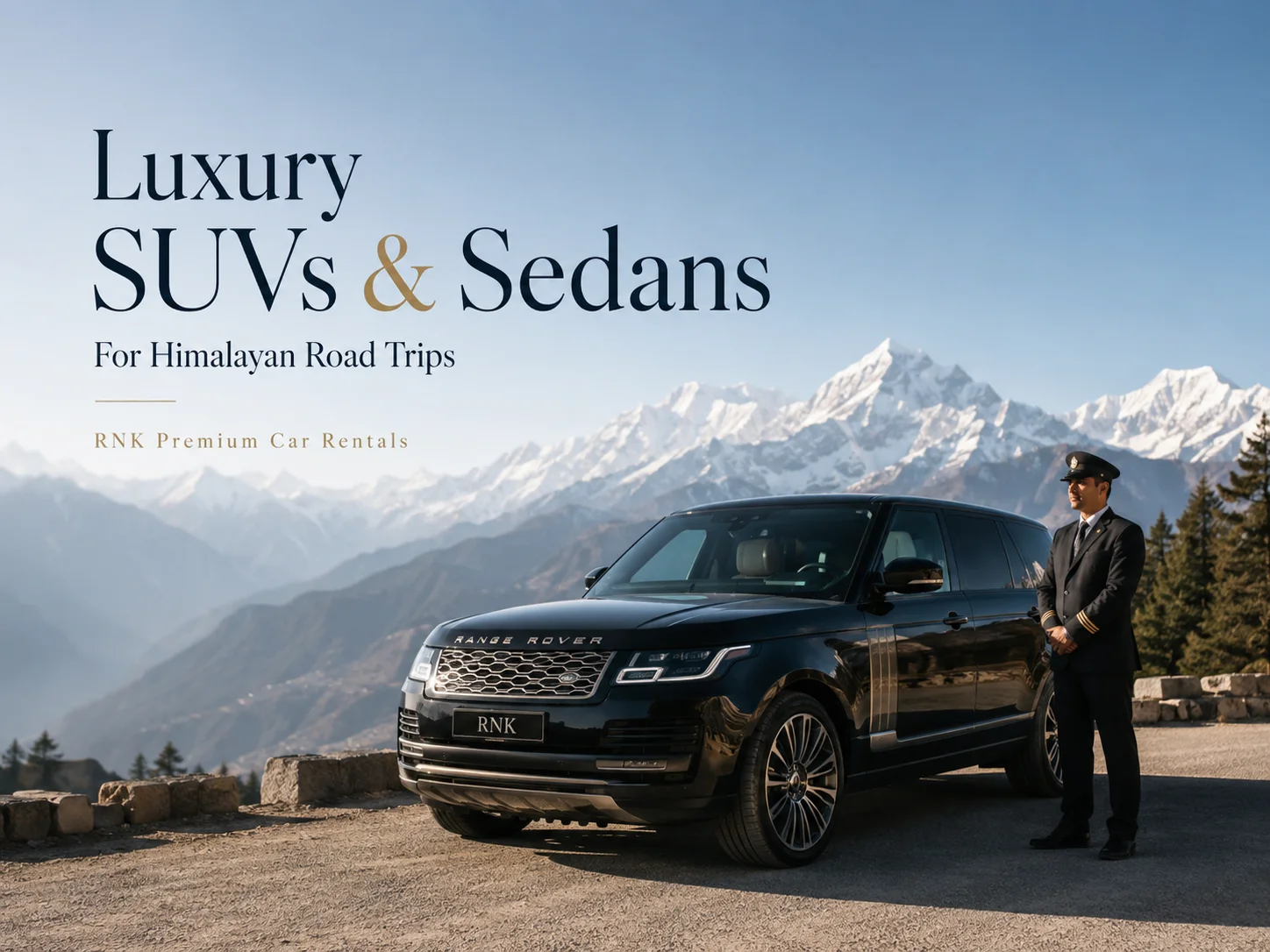
The Himalayas don't forgive a poor vehicle choice the way a highway does. A sedan that feels perfectly composed on the Mumbai-Pune expressway can genuinely struggle on a rutted stretch above Rohtang, and a vehicle with weak ground clearance can turn a scenic mountain pass into a real safety concern rather than a photo opportunity. Choosing the right car for a Himalayan road trip in 2026 isn't about luxury for its own sake — it's about matching a vehicle's actual engineering to terrain that punishes the wrong choice.
The short answer: for most Himalayan routes — Leh-Ladakh, Manali-Spiti, Kashmir, or the northern hill circuits — a high-ground-clearance luxury SUV with four-wheel drive is the safer and more comfortable choice over a sedan, given the altitude, unpaved stretches, and unpredictable weather these roads involve. Sedans remain a strong option only for smoother, well-maintained hill routes at lower altitudes.
This guide breaks down exactly which luxury SUVs and sedans handle Himalayan terrain best in 2026, what safety and comfort features actually matter at altitude, and how to choose between vehicle classes depending on your specific route.
Why Vehicle Choice Matters More in the Himalayas Than Anywhere Else in India
Most road trip vehicle decisions in India come down to comfort and budget. Himalayan road trips add a third, non-negotiable factor: whether the vehicle can actually handle the terrain safely.
Routes like Leh-Ladakh and Manali-Spiti involve extended stretches of unpaved road, water crossings, steep gradients, and altitude changes that put real strain on a vehicle's engine, brakes, and cooling systems. Add in unpredictable weather — sudden snow, landslides, temperature swings of 20+ degrees between day and night — and the margin for a vehicle underperforming becomes genuinely dangerous rather than just inconvenient. Our Leh-Ladakh road trip guide with chauffeur-driven luxury cars and our Manali to Spiti Valley route tips both cover route-specific terrain challenges that directly inform the vehicle choice below.
Ground Clearance: The Single Most Important Spec for Mountain Roads
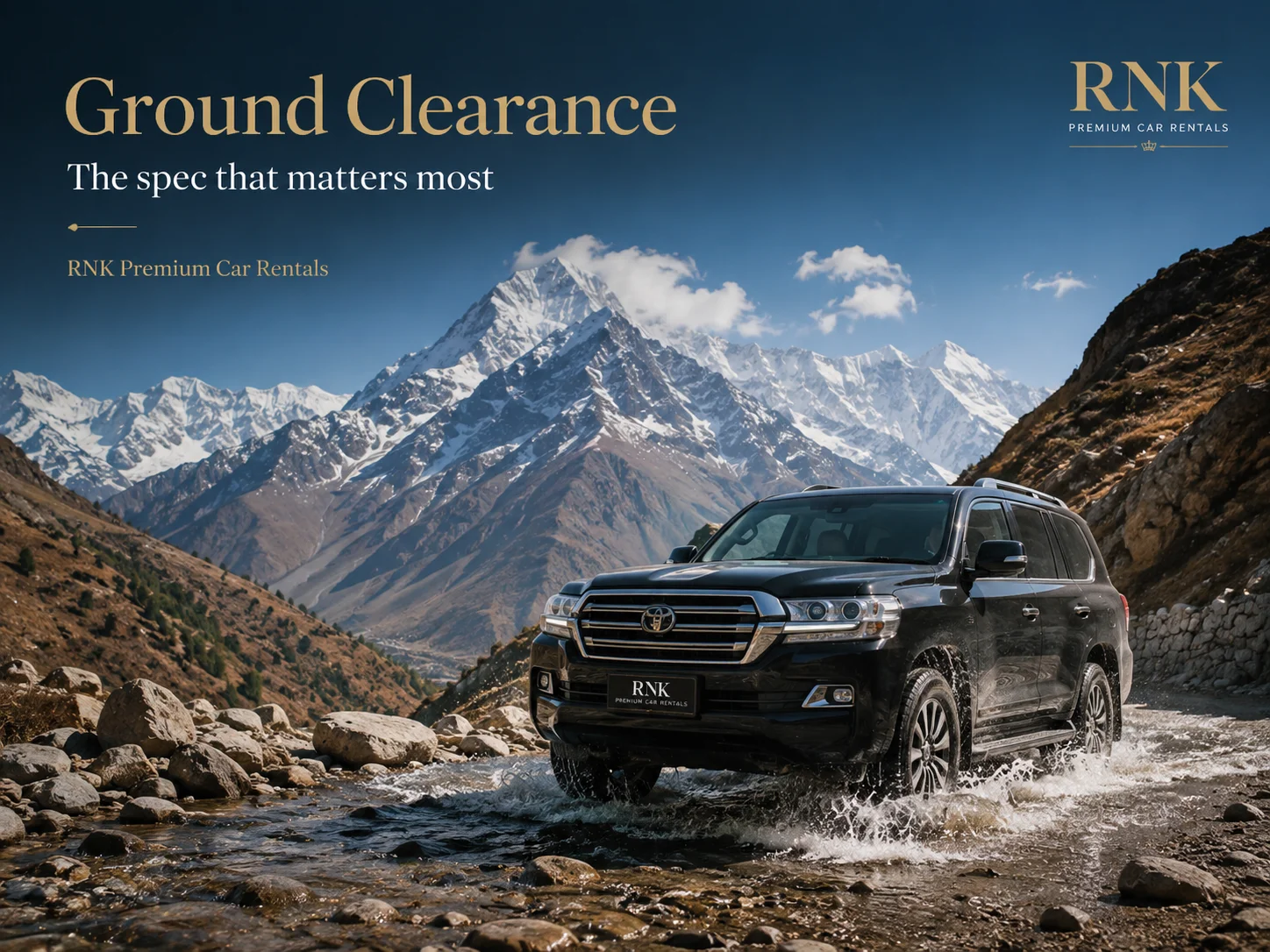
Before comfort, before styling, before anything else — ground clearance is the specification that determines whether a vehicle can safely navigate Himalayan roads at all.
Rutted, rocky, or partially washed-out stretches are common on high-altitude routes, and a vehicle with low ground clearance risks undercarriage damage or getting stuck in situations a taller SUV would clear without issue. As a general guideline, anything below roughly 200mm of ground clearance becomes a genuine liability on the more demanding stretches of routes like Leh-Ladakh or Spiti, while SUVs built specifically for this kind of terrain typically clear 220mm or more.
Best Luxury SUVs for Himalayan Terrain in 2026
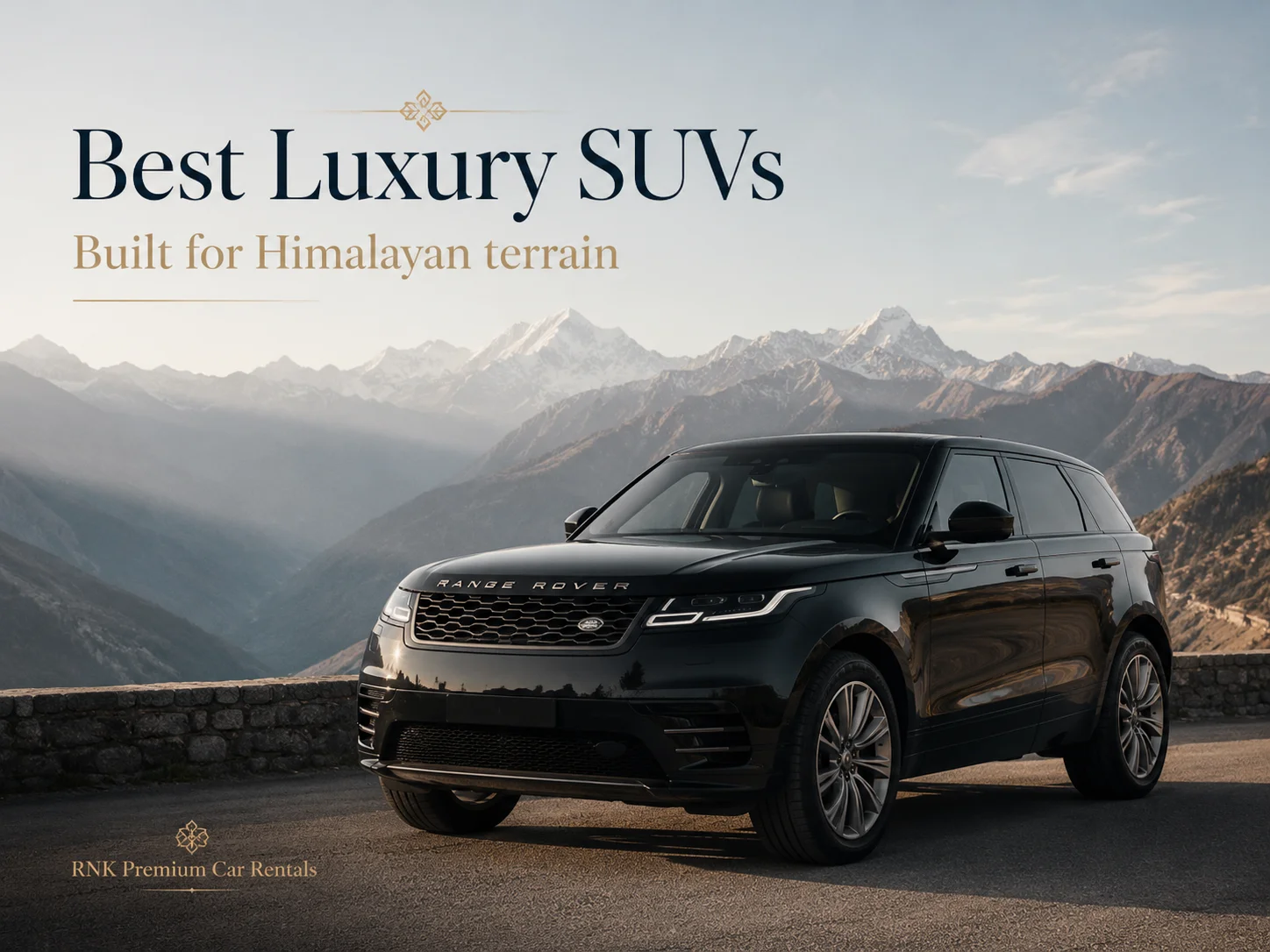
For the demanding, high-altitude stretches of Himalayan road trips, a small group of SUVs consistently stand out for the combination of ground clearance, four-wheel-drive capability, and cabin comfort that mountain travel actually requires.
The Toyota Fortuner remains one of the most trusted choices for Himalayan terrain specifically because of its proven four-wheel-drive system, strong ground clearance, and a reputation for mechanical reliability at altitude that matters enormously when the nearest service station might be hours away. You can check current Fortuner availability in our fleet directly.
The Mercedes-Benz GLE offers a genuinely different proposition — luxury-tier comfort and cabin technology combined with capable all-wheel-drive performance, making it a strong pick for travelers who want Himalayan capability without sacrificing the comfort standard they'd expect on a flatter luxury trip. See current GLE options here.
For larger groups or families wanting to travel together rather than split across vehicles, the Toyota Innova Crysta and Innova Hycross both offer a strong balance of ground clearance, seating capacity, and comfort suited to multi-day mountain travel — practical, road-trip-tested choices that don't compromise on reliability. Explore the Innova Crysta fleet and Hycross fleet for current options.
For travelers wanting maximum luxury presence even in the mountains, the Mercedes-Benz GLS brings flagship-level comfort and space, though it's best suited to routes with better-maintained roads rather than the most extreme unpaved stretches. Our comparison of SUV versus sedan luxury rentals in India is a useful reference for weighing these trade-offs against your specific route.
When a Sedan Still Makes Sense for Hill Routes
Not every Himalayan or hill-region trip demands an SUV. For smoother, well-maintained routes at lower altitudes — parts of Himachal, the approach roads into popular hill stations, or routes that stay largely on paved highways — a luxury sedan can still deliver a genuinely comfortable experience.
A flagship sedan like the Mercedes-Benz E-Class offers excellent ride quality and comfort on these smoother stretches, though it should generally be reserved for routes that don't involve extended unpaved sections, water crossings, or high-altitude passes above roughly 4,000 meters, where ground clearance and four-wheel drive genuinely start to matter for safety.
Safety Features That Actually Matter at High Altitude
Beyond ground clearance, a handful of specific safety features make a measurable difference on Himalayan roads, and it's worth confirming these directly with your rental provider rather than assuming every vehicle in a class has them.
Four-wheel drive or all-wheel drive is close to essential for any route involving unpaved or loose-surface terrain, since it provides meaningfully better traction on the kind of surfaces common above the tree line. Disc brakes on all four wheels, rather than a mix of disc and drum, provide more consistent braking performance on long mountain descents where brakes are worked hard for extended periods. Hill-descent control and hill-hold assist, available on most modern SUVs in this class, meaningfully reduce driver strain and risk on steep, switchback-heavy sections. And adequate engine cooling capacity matters more than most travelers realize, since engines work harder at altitude where the air is thinner and cooling efficiency drops.
Comfort Considerations for Multi-Day Mountain Travel
Himalayan road trips typically involve long consecutive days of driving, often six to eight hours or more between stops, which makes cabin comfort a genuine practical concern rather than just a luxury nice-to-have.
Look for vehicles with strong seat ergonomics for extended sitting, effective climate control that can handle the sharp temperature swings common at altitude, and reasonable luggage capacity for the layered clothing and gear multi-day mountain travel requires. Our road trip packing list for luxury travelers covers exactly what to plan for on this front, and our guide to family road trips in India with premium vans is a useful reference for larger groups prioritizing space and comfort over multiple days.
Route-Specific Vehicle Recommendations
Different Himalayan routes present genuinely different demands, and the right vehicle choice should reflect the specific route rather than a one-size-fits-all recommendation.
For Leh-Ladakh, widely considered the most demanding Himalayan route in India due to extreme altitude, unpaved stretches, and water crossings, a four-wheel-drive SUV like the Fortoner or GLE is strongly recommended over any sedan. Our Leh-Ladakh road trip guide covers the specific terrain challenges this route presents in detail.
For Manali to Spiti Valley, similarly demanding with high passes and variable road conditions, the same SUV-first recommendation applies — our Manali to Spiti route tips guide breaks down the specific stretches where ground clearance matters most.
For winter road trips in North India more broadly, where snow and ice add another layer of risk on top of altitude, our guide to the best routes for winter road trips in North India covers additional seasonal considerations that affect vehicle choice, including winter tire recommendations and cold-start reliability.
Why Chauffeur-Driven Is Strongly Recommended for Himalayan Routes
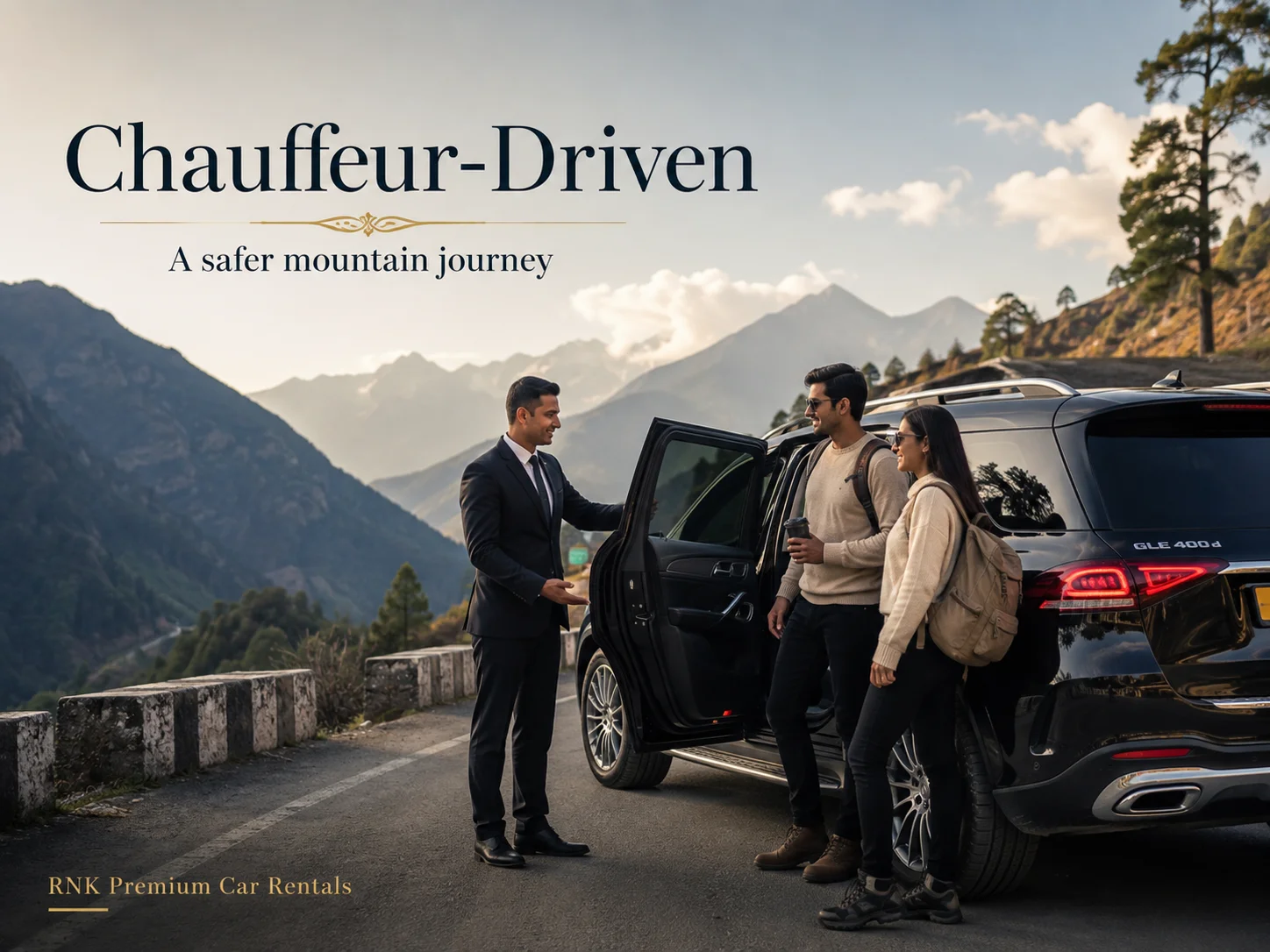
Beyond vehicle choice, who's driving matters enormously on Himalayan terrain — this is genuinely one context where chauffeur-driven travel offers a safety advantage, not just a comfort one.
Professional drivers experienced with mountain roads understand how to manage switchbacks, water crossings, and altitude-related vehicle behavior in ways that make a measurable safety difference for travelers unfamiliar with this kind of terrain. Our guide on chauffeur-driven outstation trips and their benefits and our comparison of chauffeur-driven versus self-drive luxury cars both cover this trade-off, and it applies with particular force to Himalayan terrain specifically, where local road knowledge and driving experience genuinely reduce risk.
Altitude Sickness and Vehicle Comfort: An Overlooked Connection
Vehicle comfort has a real, if underappreciated, connection to how travelers cope with high-altitude travel. A smoother, more stable ride reduces motion and physical stress during the ascent, which can meaningfully affect how well travelers acclimatize compared to a jarring, poorly cushioned ride over the same terrain.
This is a genuine, practical reason to prioritize a well-equipped SUV with good suspension tuning over a budget option, beyond pure comfort preference — it's a factor that can affect how the whole trip feels for passengers, especially those more sensitive to altitude changes.
Booking Considerations for Himalayan Road Trips
Himalayan routes are seasonal by nature — most are only accessible for a limited window each year due to snow closures — which means vehicle demand concentrates heavily into a shorter booking season than most other Indian road trips.
Booking well ahead of peak season (typically May through September for most high-altitude routes) is worth doing specifically for four-wheel-drive SUVs, since these are the most requested vehicle class for exactly this kind of trip and availability tightens as the season approaches. Our guide on luxury travel etiquette for Indian roads is also worth a read for broader road trip planning etiquette that applies to mountain travel specifically.
Questions to Ask Before Booking a Vehicle for a Himalayan Trip
A short list of specific questions will help confirm your chosen vehicle and provider can actually deliver a safe, comfortable Himalayan road trip.
Ask about the specific ground clearance and drivetrain (2WD, 4WD, AWD) of the vehicle being offered. Ask whether the assigned driver has specific experience on your intended route. Ask what maintenance and safety checks are done before a Himalayan trip specifically, given the added strain on the vehicle. And ask what the provider's contingency plan is for road closures, weather delays, or altitude-related issues during the trip.
Frequently Asked Questions
Is an SUV always better than a sedan for Himalayan road trips? For high-altitude, unpaved, or water-crossing routes like Leh-Ladakh or Spiti, yes — an SUV with strong ground clearance and four-wheel drive is significantly safer. For smoother, lower-altitude hill routes on paved roads, a luxury sedan can still be a comfortable choice.
What ground clearance is recommended for Himalayan terrain? Generally 200mm or more is recommended for demanding routes, with SUVs built specifically for this kind of terrain typically offering 220mm or higher.
Is four-wheel drive necessary for all Himalayan routes? It's strongly recommended for high-altitude, unpaved, or water-crossing sections, though it matters less on well-maintained, paved hill routes at lower elevations.
Should I choose self-drive or chauffeur-driven for a Himalayan road trip? Chauffeur-driven is generally recommended for Himalayan terrain specifically, since professional drivers experienced with mountain roads offer a genuine safety advantage over self-driving unfamiliar terrain.
When is the best time to book a vehicle for a Himalayan road trip? Most high-altitude routes are only accessible from roughly May through September, so booking well ahead of this window is important, particularly for in-demand four-wheel-drive SUVs.
The Bottom Line
Choosing the best luxury SUV or sedan for a Himalayan road trip in 2026 comes down to matching the vehicle to the actual terrain — ground clearance, drivetrain, and safety features for high-altitude and unpaved routes, comfort and cabin quality for smoother hill roads, and a professional, route-experienced chauffeur regardless of which vehicle you choose. Get this right, and the vehicle becomes something you barely think about — which is exactly what you want on a trip where everything else is designed to take your breath away.
Planning a Himalayan road trip and want help choosing the right vehicle for your route? Get in touch with our team to discuss your itinerary, or explore the full RNK fleet to see current SUV and sedan availability for your dates.