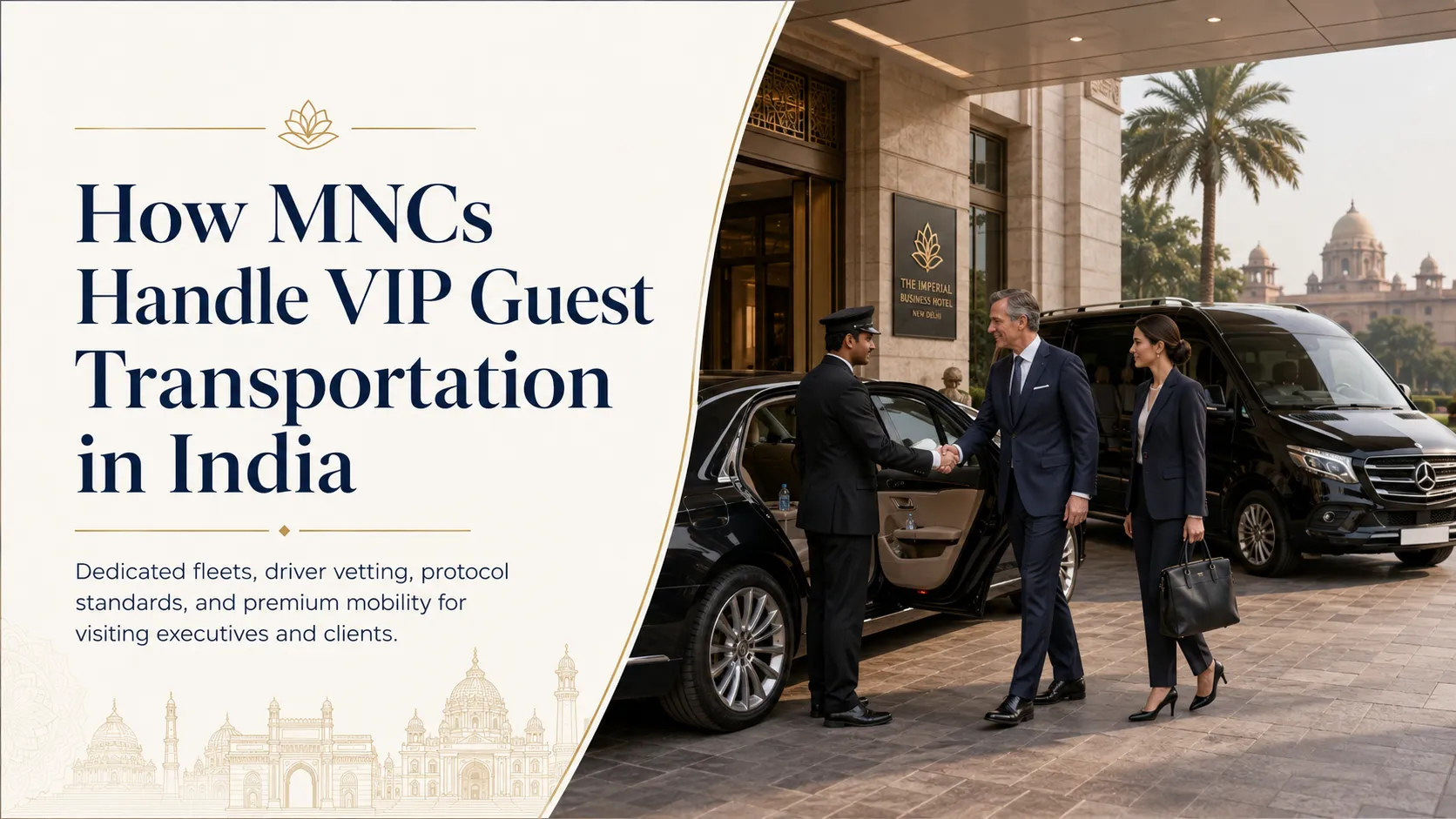
When a multinational company brings a visiting CEO, a global board member, or a major client into India, the transportation arrangement is rarely treated as a simple booking. It's usually built around a specific, well-rehearsed protocol — one that most people outside corporate operations teams never see, but that shapes how smoothly a visit actually goes. Understanding how MNCs handle this, and why they treat it with this level of care, is genuinely useful for any company scaling up its own approach to VIP guest transportation in India.
This guide breaks down how multinational companies typically structure VIP transportation here — the standards, the planning process, and what separates a genuinely well-run VIP mobility program from an ad hoc one.
Why MNCs Treat VIP Transportation Differently
For most multinational companies, VIP guest transportation isn't just a logistics decision — it's a visible extension of how the company operates, particularly when the guest is a client, investor, or senior executive visiting from another market for the first time.
A smooth, professional arrival experience signals operational maturity in a way that's hard to replicate through any other single touchpoint. Our guide on why MNCs prefer premium chauffeur services covers this shift in more depth, and our piece on how HNIs choose premium mobility in India offers a useful parallel from the individual traveler's perspective on what genuinely defines a premium experience here.
The Core Standards MNCs Build VIP Transport Around
Across most well-run MNC VIP transportation programs, a handful of standards show up consistently, regardless of industry or company size.
Dedicated, vetted drivers are non-negotiable — VIP transport is rarely handled by rotating or on-demand drivers, but by a small, trusted pool who are briefed specifically on protocol and discretion. A named point of contact is standard too, someone who can be reached directly if a flight is delayed or a schedule shifts, rather than the guest or their assistant having to navigate a general booking line. Our guide on safety standards in corporate mobility and our piece on luxury car rental safety and chauffeur standards both cover the vetting and protocol expectations that sit behind this kind of dedicated service.
Airport Arrival Protocol: Where the Standard Is Set Immediately
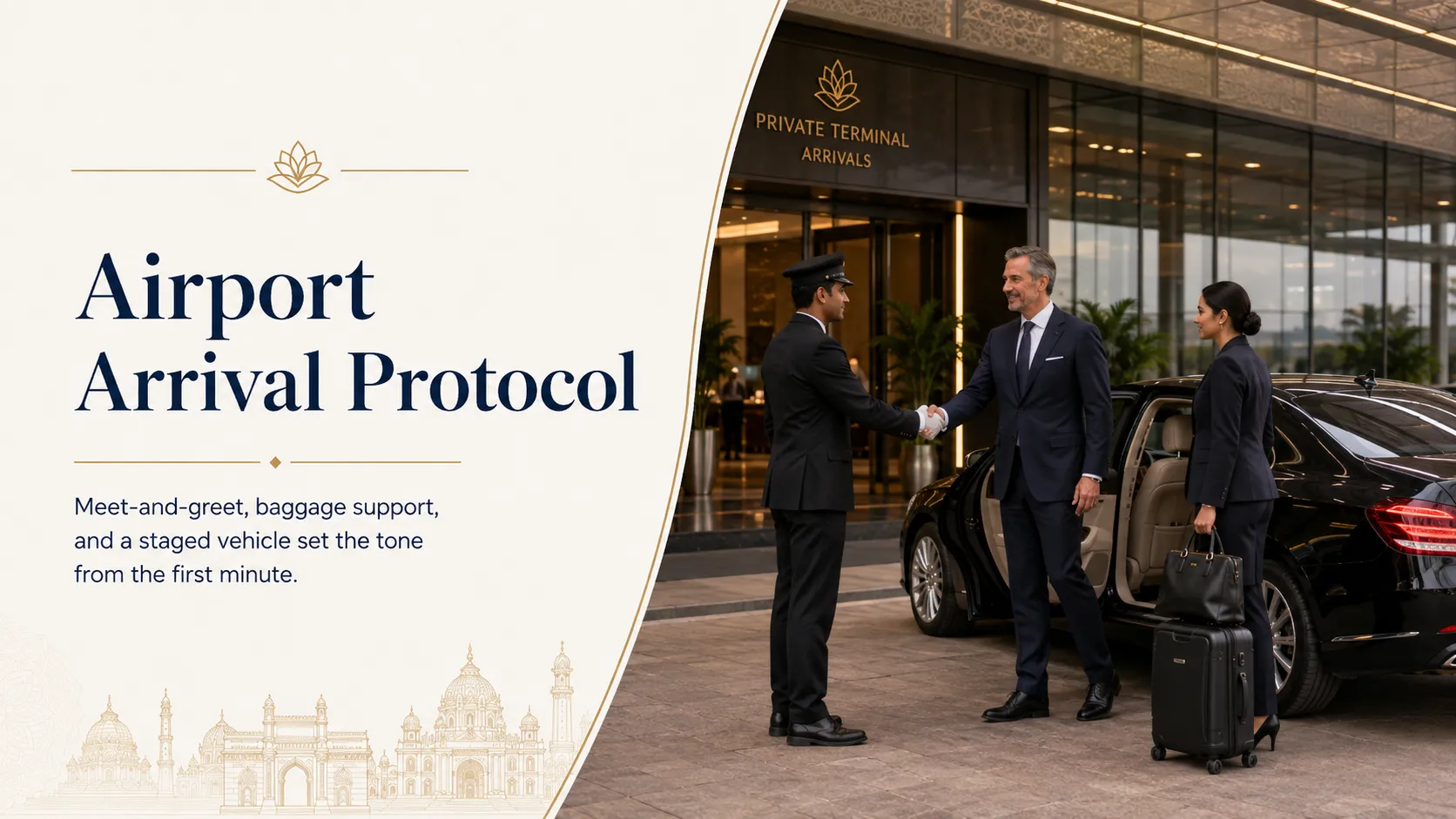
For most VIP guests, the airport arrival is the very first impression of the visit, and MNCs typically treat this specific moment with the most rigor of any single touchpoint in the entire trip.
This usually means a meet-and-greet coordinator at arrivals (sometimes airside for very senior guests, where permitted), immediate baggage assistance, and a vehicle staged and ready rather than being called once the guest has already cleared arrivals. Our guide to international arrivals and luxury meet-and-greet in India covers exactly how this process is typically structured, and our piece on VIP and celebrity airport movements in India covers the broader standard MNCs apply to high-profile arrivals specifically.
Vehicle Standards: Why the Choice Isn't Arbitrary
The specific vehicle assigned to a VIP guest is rarely a random selection from available inventory — MNCs typically match vehicle class to the guest's seniority and the nature of the visit.
For board-level executives and top-tier clients, flagship sedans like the Mercedes S-Class remain the standard choice, given how universally recognized and appropriate they are for this tier. Our guide on luxury cars for CXOs and board members covers exactly why this specific tier of vehicle has become the default for senior visiting executives, rather than a broader range of options. For guests traveling with an entourage or requiring more space, the Mercedes V-Class or Mercedes GLS offer a comparable standard of comfort with additional capacity.
Scheduling and Itinerary Integration: Treating Mobility as Part of the Agenda
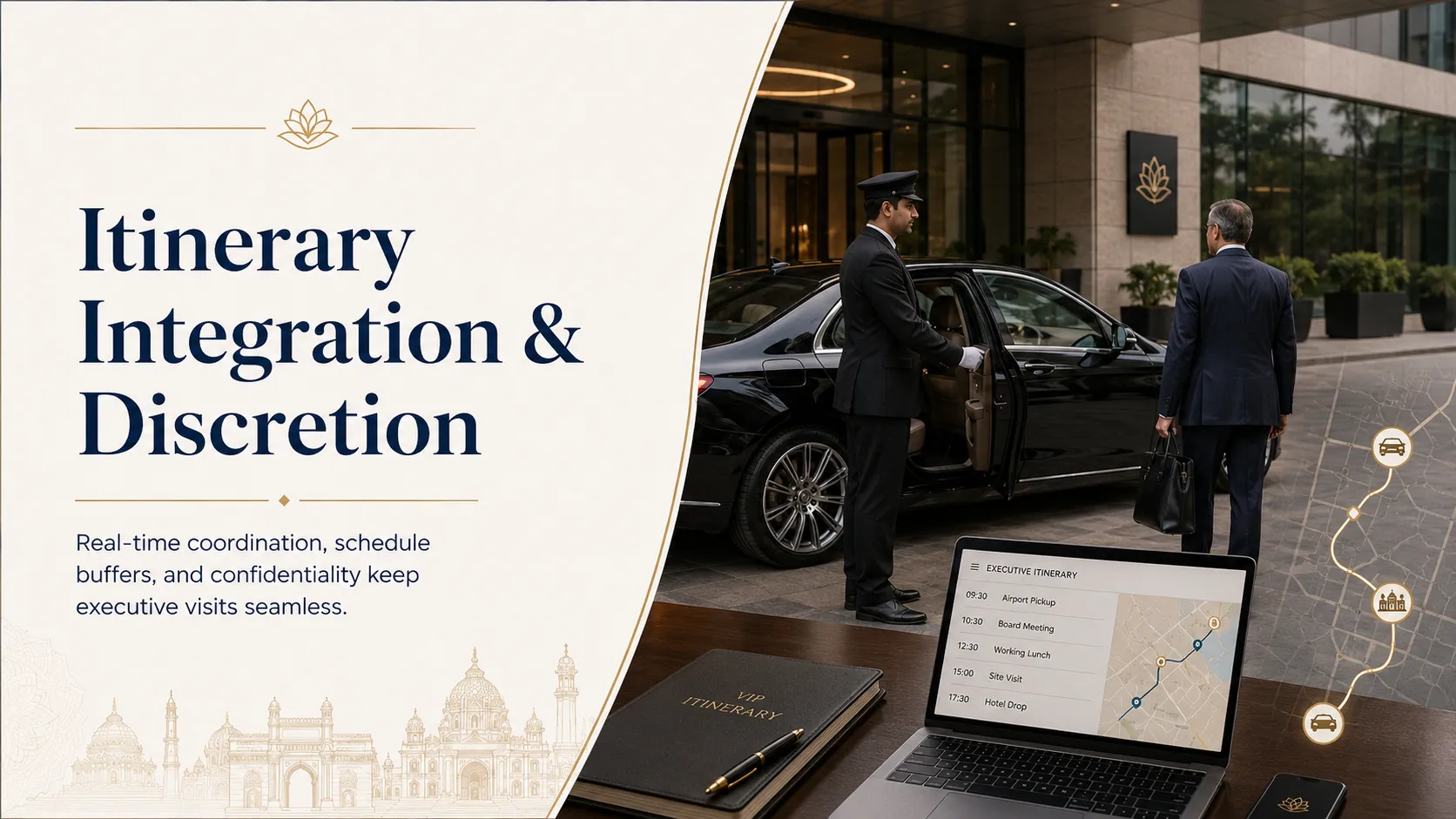
Well-run MNC VIP transportation isn't planned as a separate service that happens alongside a visit — it's built directly into the guest's full itinerary, with the transportation team working from the same schedule as the guest's own team.
This means every meeting, meal, and transfer is mapped in advance, with realistic buffers for city traffic, and the transportation provider treated as an extension of the visit's planning team rather than a vendor booked separately. Our guide to corporate event transportation planning covers this same principle applied at event scale, and it holds just as true for a single VIP guest's multi-day visit.
City-Specific Considerations MNCs Plan Around
VIP transportation standards don't change city to city, but the practical planning around them does — traffic patterns, venue access, and realistic transfer times vary meaningfully across India's major business hubs.
Our city-specific guides — including corporate luxury rentals in Hyderabad, Chennai luxury rentals for outstation and airport travel, and our Mumbai versus Delhi luxury rental comparison — cover exactly these city-level factors that MNC operations teams typically build into their VIP transportation planning for a given market.
Discretion and Confidentiality: An Often-Overlooked Standard
For many VIP guests, particularly those visiting for sensitive business discussions, discretion is as important a standard as comfort or punctuality.
This includes drivers trained not to discuss guest itineraries, vehicles chosen for a lower public profile when the visit calls for it rather than maximum visual statement, and clear internal protocols around who has access to a guest's schedule and movements. This is a detail that rarely comes up in general transportation planning but is treated as standard practice in mature MNC VIP mobility programs.
Building a Standing VIP Transportation Arrangement
For MNCs that regularly host visiting executives, clients, or board members, rebuilding the transportation plan from scratch for every visit adds unnecessary risk and inconsistency.
A standing arrangement with a provider who already understands the company's standards, preferred vehicle classes, and typical guest profile tends to produce a more consistent experience visit after visit. Our monthly corporate car rental plans guide covers how this kind of standing arrangement is typically structured, and our corporate travel policy compliance piece is useful for formalizing VIP transportation standards into written company policy.
Questions MNCs Typically Ask Before Committing to a Provider
The questions a mature MNC operations team asks before selecting a VIP transportation provider tend to be more specific than a general request for premium cars.
They typically ask about driver vetting and background check processes specifically. They ask how the provider handles real-time schedule changes, given how often executive itineraries shift. They ask whether a dedicated point of contact will be assigned for the full visit, rather than routing through general customer service. And they ask whether the provider can support a standing arrangement across multiple visits and cities, rather than being rebooked separately each time.
Frequently Asked Questions
What makes VIP guest transportation different from standard corporate transport? VIP transportation typically involves dedicated, vetted drivers, a named point of contact, tighter itinerary integration, and a higher standard of discretion — elements that go beyond what general attendee or employee transport requires.
Why do MNCs treat airport arrival as such a critical touchpoint? For most VIP guests, the airport arrival is their first direct impression of the visit, so MNCs typically apply their highest standard of coordination — meet-and-greet, baggage assistance, and a staged vehicle — specifically to this moment.
What vehicle class do MNCs typically use for senior executive visits? Flagship sedans like the Mercedes S-Class are the standard choice for board-level executives and top-tier clients, given how universally appropriate and recognized they are for this tier of guest.
Does VIP transportation planning change by city in India? The core standards stay consistent, but the practical planning — traffic patterns, venue access, realistic transfer times — varies meaningfully by city, which is why most mature programs build in city-specific planning rather than a single generic approach.
Should companies set up a standing VIP transportation arrangement? For companies that regularly host visiting executives or clients, a standing arrangement with a single trusted provider generally produces more consistency and reliability than rebooking separately for each visit.
The Bottom Line
The way MNCs handle VIP guest transportation in India comes down to treating it as a genuine extension of the visit's planning and the company's own standards — dedicated drivers, tight itinerary integration, appropriate vehicle choices, and real discretion where it matters. Companies that build this into a consistent, standing program tend to deliver a noticeably smoother experience than those treating each visit as a one-off booking.
Hosting a VIP guest or executive visit and want to build in this level of coordination? Get in touch with our team to plan your VIP transportation, or explore our VIP movements service to see how it's typically structured.