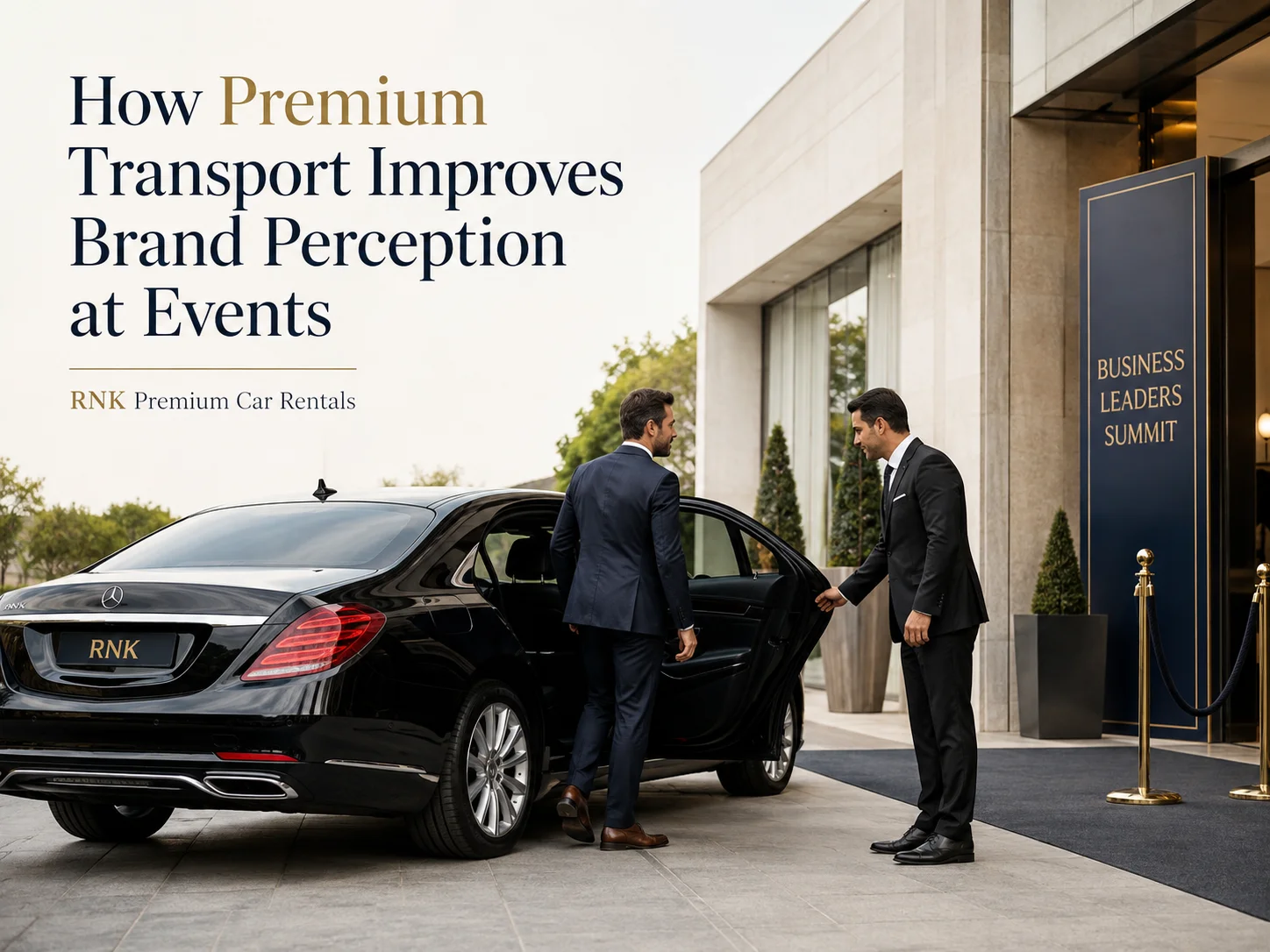
Brand perception gets built in dozens of small moments across an event — the welcome desk, the venue's décor, how quickly a question gets answered. Transportation rarely makes the list when companies think about branding, yet it's often the very first and very last touchpoint a guest experiences, arriving before the welcome desk and lingering after the goodbyes. Getting it right is a genuine, if underused, branding opportunity. Getting it wrong undercuts everything the rest of the event tried to build.
This guide looks at exactly how premium transportation shapes brand perception at corporate events, and why more companies are starting to treat it as a deliberate part of their brand experience rather than a background logistics detail.
Why Transportation Is a Brand Touchpoint, Not Just Logistics
Every interaction a guest has with a company during an event — however small — contributes to their overall impression of that company. Transportation is unusual in that it's often the very first interaction, happening before the guest has even entered the venue.
A guest picked up in a clean, professional vehicle by a courteous, punctual driver forms an early, positive impression before the event has technically started. A guest left waiting, confused about pickup logistics, or riding in a vehicle that doesn't match the event's stated tone forms the opposite impression just as quickly. Our guide on why luxury chauffeur services matter for corporate events covers this same principle from the operational side, and this piece focuses specifically on the branding implications.
The First Impression Effect: Why Arrival Sets the Tone
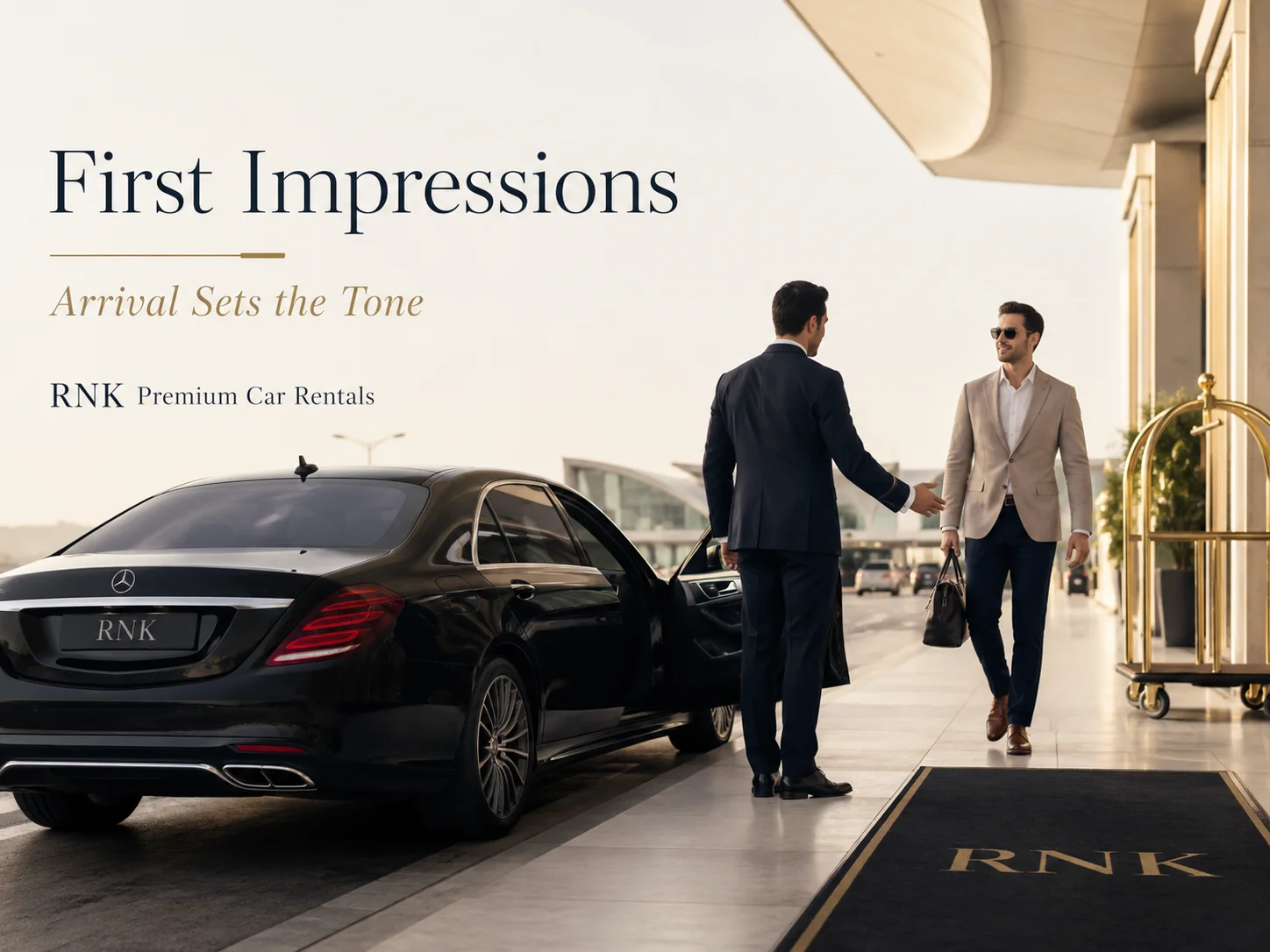
Psychologically, first impressions carry disproportionate weight relative to how much time they actually occupy — a five-minute airport pickup or venue transfer can shape a guest's expectations for an entire multi-hour or multi-day event.
This is exactly why companies hosting high-stakes events — investor meetings, major client visits, product launches — increasingly treat the arrival experience with the same care as the event's opening moments. Our guide to VIP and celebrity airport movements in India and our piece on international arrivals and luxury meet-and-greet in India both cover how this first-touchpoint standard gets built for guests whose impression matters most.
Vehicle Choice as a Brand Statement
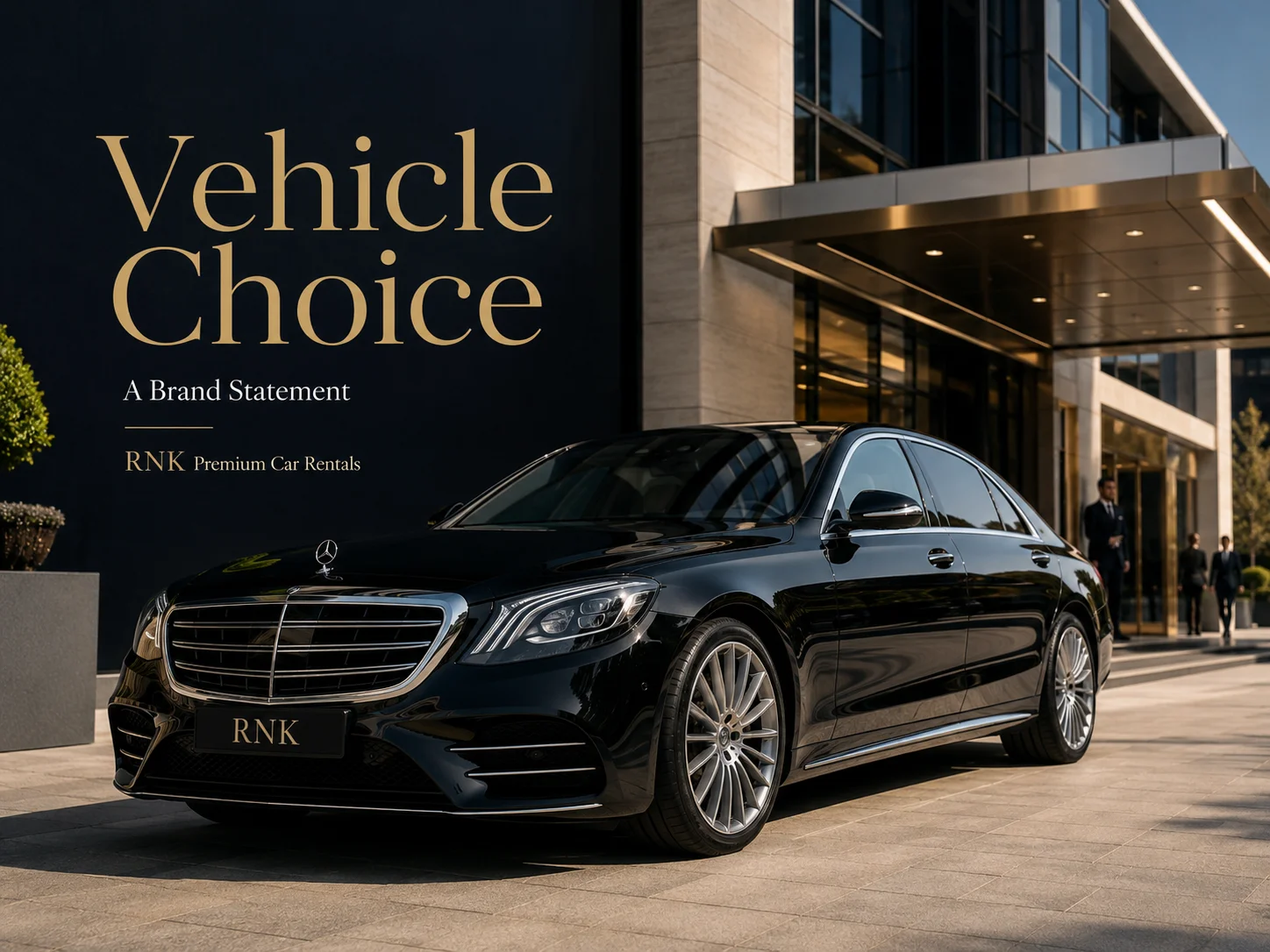
The specific vehicle a company chooses for guest transport is rarely neutral — it communicates something about the company's positioning, whether intentional or not.
A flagship sedan like the Mercedes S-Class signals established, conservative professionalism appropriate for most corporate contexts. A more dramatic choice from the Rolls-Royce collection signals a bolder, more premium positioning suited to luxury brand launches or high-profile award events. Our guide on luxury transportation for award nights and brand launches covers this vehicle-as-statement principle in more depth for events where the arrival itself is part of the show.
Consistency Across Every Touchpoint
Brand perception isn't built by a single strong moment — it's built by consistency across every touchpoint a guest experiences, and transportation is where that consistency most often breaks down if it isn't deliberately managed.
A polished venue paired with a disorganized or unprofessional transport experience creates a jarring inconsistency that guests notice, even if they can't immediately articulate why the event felt slightly "off." Our guide on corporate event logistics mistakes companies make covers many of the specific gaps that create this kind of inconsistency, and how to avoid them.
The Discretion Factor: What Chauffeur Conduct Communicates
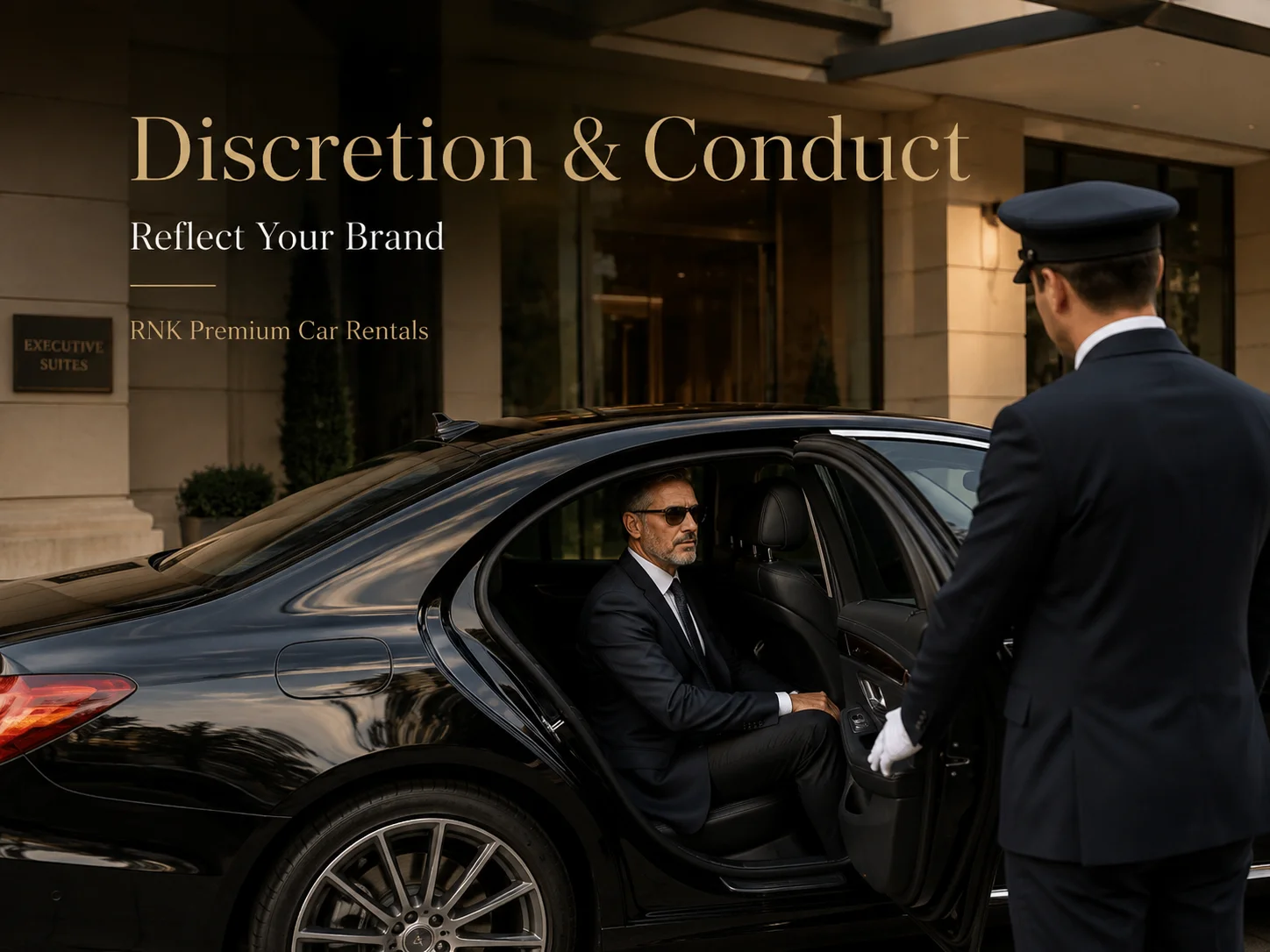
Beyond the vehicle itself, a driver's conduct — professionalism, discretion, punctuality — becomes part of the brand experience whether a company intends it to or not.
A chauffeur who handles a guest's arrival smoothly, discreetly, and without friction reinforces exactly the kind of operational competence a company wants associated with its brand. Our guide on why chauffeur etiquette matters in executive travel covers this in detail, and it applies just as directly to guest and client transport at events as it does to routine executive travel.
How Premium Transport Reflects on Different Guest Tiers
Brand perception isn't shaped identically for every guest — VIP clients, media, general attendees, and employees may each notice and weigh the transportation experience differently, which is part of why a deliberate fleet mix matters.
For VIP guests and media, a highly polished, dedicated transport experience reinforces the sense that the company treats important relationships with real care. Our guide on how MNCs handle VIP guest transportation in India covers exactly this standard. For general attendees, a reliable, well-organized shuttle system — even without flagship vehicles — still communicates competence and consideration, which matters just as much for overall brand perception even if it's a less visually dramatic touchpoint.
Premium Transport at Product Launches and Brand Events
For brand launches specifically, where the entire event is designed to build a particular brand impression, transportation has an outsized opportunity to reinforce (or undercut) that impression before guests even see the product.
Our guide on luxury transportation for award nights and brand launches covers how this plays out in practice — vehicle choice, red-carpet-style arrival sequencing, and coordination with media all become part of the same brand story the launch itself is trying to tell.
Measuring the Impact: Why This Matters Beyond "Feeling Nice"
For companies weighing whether premium transport is worth the investment, it's worth framing this beyond aesthetics — guest experience quality has real downstream effects on client relationships, investor confidence, and how media or influencers characterize an event afterward.
A guest who had a smooth, well-organized arrival is more likely to walk into an event receptive and positively disposed, compared to one who arrived frustrated by transport confusion. This is a genuine, if hard-to-quantify, factor in how successful an event ultimately feels to the people who mattered most to invite. Our guide on what makes ground travel truly luxurious in India covers the specific service details that create this kind of positive guest disposition.
Building Transportation Into Brand Guidelines
Companies serious about consistent brand perception across events increasingly formalize transportation standards — preferred vehicle classes, driver conduct expectations, meet-and-greet protocols — into their broader event or brand guidelines, rather than leaving it to whoever happens to book transport for a given event.
Our monthly corporate car rental plans guide covers how a standing arrangement with a single trusted provider supports this kind of consistency, since the same standards get applied event after event rather than being rebuilt each time.
Questions to Ask When Evaluating Transport for Brand Impact
A few specific questions help companies evaluate whether a transportation provider can actually deliver on brand perception goals, not just logistics.
Ask whether the provider can match vehicle choice to the specific tone or positioning the event is going for. Ask about driver presentation and etiquette standards specifically. Ask how they handle differentiated experiences for VIP guests versus general attendees within the same event. And ask whether they can support a consistent standard across multiple events if brand consistency matters over time.
Frequently Asked Questions
How does transportation affect brand perception at corporate events? Transportation is often the first and last touchpoint a guest experiences at an event, so a smooth, professional experience reinforces positive brand perception, while a disorganized one can undercut even a well-executed event.
Does the specific vehicle used for guest transport matter for branding? Yes — vehicle choice communicates positioning, whether it's the conservative professionalism of a flagship sedan or the bolder statement of a luxury flagship reserved for high-profile moments.
Should VIP guests get a different transport experience than general attendees for branding reasons? Generally yes — differentiating the transport experience by guest tier reinforces that a company values its most important relationships, while still maintaining a baseline standard of reliability for all guests.
Is investing in premium transport worth it just for brand perception? For companies hosting high-stakes events — investor meetings, major client visits, product launches — the arrival experience genuinely shapes how receptive guests are to the rest of the event, making it a worthwhile, if often overlooked, investment.
How can companies keep transportation consistent with their brand across multiple events? Formalizing transportation standards into brand or event guidelines, and working with a single trusted provider through a standing arrangement, helps maintain consistency rather than rebuilding the approach for each event.
The Bottom Line
Premium transport improves brand perception at events because it's rarely just logistics — it's often the very first and last impression a guest takes away, and it quietly reinforces or undermines everything else the event was designed to communicate. Companies that treat transportation as a deliberate brand touchpoint, not an afterthought, consistently leave a stronger impression on the guests who matter most.
Planning an event and want transportation that reinforces your brand? Get in touch with our team to plan your guest experience, or explore our corporate car rental services to see what's available.